
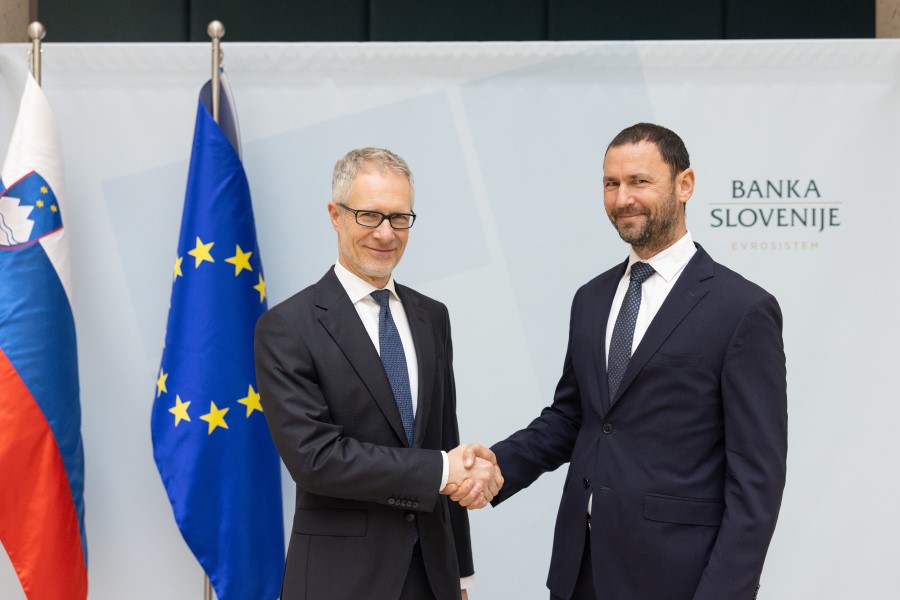
By David Barwick – FRANKFURT (Econostream) – European Central Bank Governing Council member Primož Dolenc said Friday that current conditions had allowed the ECB to keep interest rates unchanged on Thursday, but that the Governing Council would re-examine the situation at coming meetings as more data became available and the course of the Middle East war became clearer.
Dolenc, who heads Banka Slovenije, said in a statement that medium-term inflation expectations remained relatively stable, with expectations still prevailing that the war would end quickly enough for inflation to return to target over the medium term.
“Such conditions allow us to keep interest rates unchanged at this meeting, while we will re-examine the situation at upcoming meetings,” he said. “More data will then be available, the course of the war may also be clearer, and we will be able to analyze the effects of the shock through the prism of updated macroeconomic projections.”
Future ECB decisions would remain directed at ensuring that inflation stabilized at 2% over the medium term, he said.
Further steps would be based on the inflation outlook and related risks, underlying inflation dynamics and the strength of monetary policy transmission, he said.
“We will continue to decide on the monetary policy stance on a meeting-by-meeting basis,” Dolenc said.
Market expectations had shifted in the direction of tighter policy this year as higher energy prices and increased inflation risks affected investors’ views, Dolenc said.
As a result, Eurozone government bond yields were higher than before the outbreak of the Middle East conflict, he said.
After the pause in attacks, risk premia on private bonds had fallen somewhat, but remained above pre-war levels, according to Dolenc. European equity indices were also still below pre-war levels because of persistent uncertainty, he said.
Inflation rose to 3.0% in April, mainly because of 10.9% energy inflation stemming directly from the deterioration in the Middle East, while core inflation excluding energy and food edged down to 2.2%, he said.
Eurozone GDP grew by only 0.1% in 1Q, and leading indicators, including consumer confidence and PMI data, pointed to a weaker growth outlook at the start of 2Q, he said.
Future economic developments in the Eurozone remained largely dependent on global energy prices and developments in the Middle East, he said.