
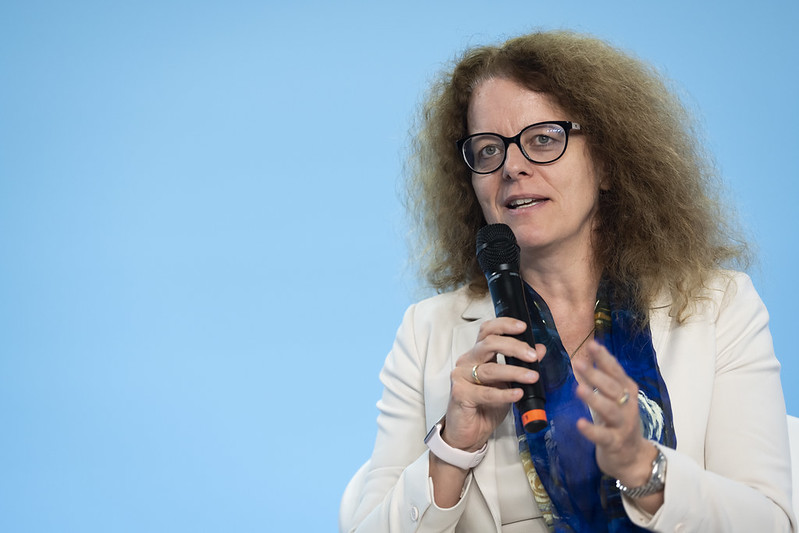
By Marta Vilar – MADRID (Econostream) – European Central Bank Executive Board member Isabel Schnabel said on Friday that policymakers should remain cautious in responding to the latest energy-driven inflation shock, adding that there was “no need to rush into action.”
In a speech at the University of Zurich, Schnabel said that the euro area was facing “a massive energy price shock due to the war in the Middle East,” warning that inflation had returned “faster than many people had thought.”
She noted that while even severe scenarios implied a smaller inflation spike than during the pandemic surge, “the spectre of inflation has returned,” pointing to a sharp rise in market-based inflation expectations.
Schnabel highlighted that the impact of the shock was likely to extend beyond energy, citing supply chain disruptions affecting fertilizers, metals and petrochemicals. These knock-on effects, she said, could feed into higher food and goods prices over time.
For the euro area, she said rising gas prices posed a particular challenge given their role in electricity pricing and the currently low level of gas storage. Refilling inventories ahead of next winter was likely to be “very expensive,” she added.
Schnabel said market pricing had shifted markedly, with inflation expectations moving from below target before the war to above 3% in the near term, while risks to inflation over the medium term had become tilted to the upside.
At the same time, she noted that longer-term inflation expectations remained “very well anchored.”
Schnabel emphasized that the current shock posed a dilemma for monetary policy, as it simultaneously pushed inflation higher and growth lower. She said policymakers needed to assess whether the shock was temporary and could be “looked through,” or whether it risked becoming entrenched.
“Monetary policy cannot do anything about the initial spike in inflation,” she said, adding that reacting to a short-lived shock could impose “unnecessary costs on the economy.”
Instead, she said the key question was whether the shock would lead to second-round effects, including higher wages and broader price pressures. The strength of demand would also be critical, she noted, as weaker demand could limit firms’ ability to pass on higher costs.
“We really have to look very carefully” at incoming data, she said, pointing to indicators of second-round effects and the overall demand environment as key factors guiding policy decisions.
Schnabel also noted that market expectations for ECB policy had shifted higher, with investors now pricing in multiple rate hikes this year, while uncertainty around the outlook had increased significantly.
Against this backdrop, she said the ECB should proceed with caution.
“We have to carefully weigh our decisions. We have to be agile. We have to be vigilant,” she said. “But there is no need to rush into action.”
She added that policymakers had time to assess how the shock was evolving and whether it was becoming embedded in inflation expectations and wage dynamics before taking action.
Related articles: