
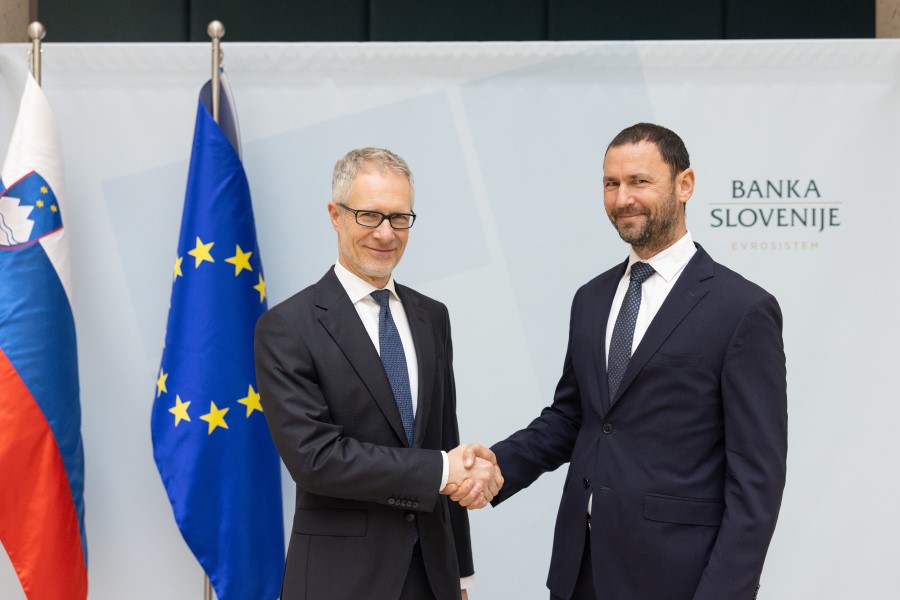
By David Barwick – FRANKFURT (Econostream) – European Central Bank Governing Council member Primož Dolenc said Friday that the war in the Middle East had made the euro area outlook more uncertain and warned that a longer conflict could push inflation higher over the medium term.
Dolenc, who heads Banka Slovenije, said the conflict had clouded the economic picture just as conditions at the start of the year had appeared favorable. With the scale and duration of the shock still unclear, he said, the Governing Council left interest rates unchanged at Thursday’s meeting.
“In these circumstances, when the outcome of the new conflict and the extent of its impact on the economy are not yet clear, we members of the Governing Council decided that interest rates would again remain unchanged,” he said.
More importantly, Dolenc highlighted the alternative scenarios discussed by policymakers in light of the “extraordinary uncertainty” surrounding events in the Middle East. Those scenarios, he said, showed that a prolonged war could produce a further rise in global energy prices and, absent a monetary policy response and in the presence of stronger second-round effects, lead to higher medium-term inflation.
He also said financial markets had reacted sharply to the outbreak of war. Volatility had risen, liquidity had deteriorated and investors had begun to price in the possibility that the ECB could raise key interest rates this year, he said.
At the same time, required yields on sovereign and private securities had increased, risk premia had risen moderately and equity indexes had fallen, according to Dolenc. Even so, euro area financial markets had continued to function well and still provided access to funding, he said.
Future Governing Council decisions would continue to depend on the inflation outlook, the associated risks, underlying inflation and the strength of monetary policy transmission, he said. “We will continue to decide on the monetary policy stance at each meeting separately.”