
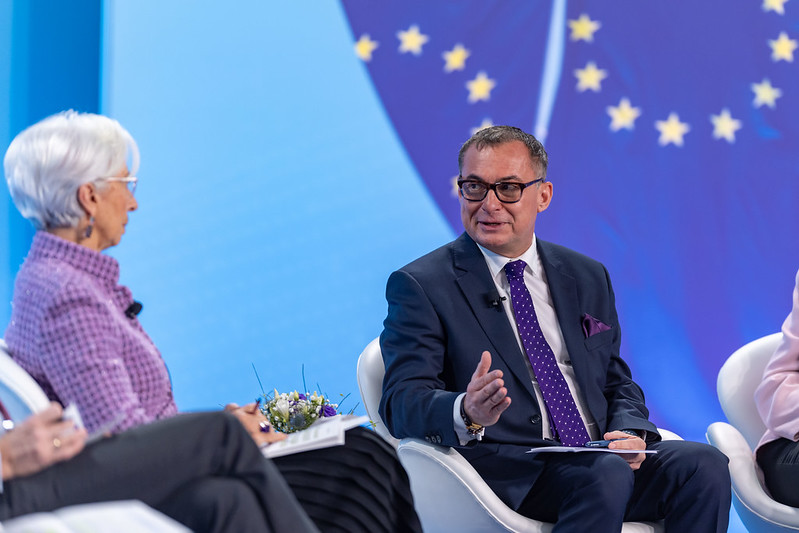
By Marta Vilar – MADRID (Econostream) – European Central Bank Governing Council member Joachim Nagel said on Thursday that European banks remain resilient but that their growing links with non-bank financial institutions could create financial stability risks, and called for stronger risk management and stricter loan assessments.
In a speech at an OMFIF roundtable in London, Nagel, who heads the Deutsche Bundesbank, said the non-bank financial institution (NBFI) sector now holds around half of all financial assets globally and in Europe, while becoming increasingly interconnected with traditional banks.
“However, NBFIs can also pose a risk to financial stability,” Nagel said. “The NBFI sector is highly interconnected with the banking sector – inside and outside of Europe.”
He pointed to Germany, where 14% of banks’ total assets consist of claims against domestic and foreign NBFIs.
When NBFIs use bank funding to extend private credit, the resulting indirect exposures can create risks for banks because of a lack of transparency, Nagel said.
“As a result, strong risk management by banks is necessary, including a stricter loan assessment,” he said.
Nagel nevertheless gave a broadly reassuring assessment of the European banking system, saying banks had remained resilient through both the pandemic and the banking turmoil of 2023.
He argued that stronger capitalization following the global financial crisis had helped stabilize the sector, rebuild confidence and ensure more reliable lending.
While European banks continue to lag some US and UK competitors in areas including net interest margins and market valuations, Nagel said this did not result from higher capital requirements.
Instead, he pointed to structural shortcomings in Europe, including fragmented banking and capital markets and complex regulatory requirements, which make it harder to allocate capital efficiently and achieve economies of scale.
Nagel called for greater integration of European financial markets, including stronger venture capital and securitization markets, increased household participation in capital markets and better cross-border provision of financial services.
He also backed a significant simplification of EU banking regulation, particularly for smaller institutions, while stressing that prudential standards should remain high.
- The author of this story can be contacted at marta.vilar@econostream-media.com