
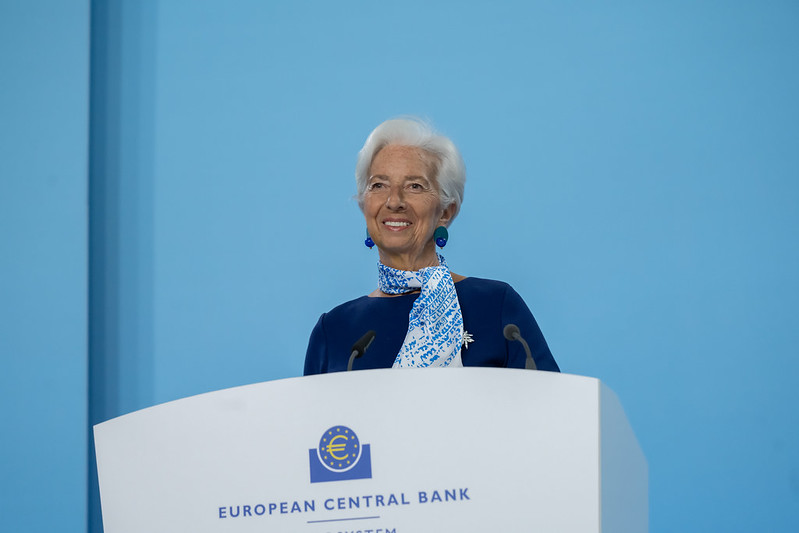
By Marta Vilar – WASHINGTON (Econostream) – European Central Bank President Christine Lagarde said on Tuesday that an energy shock from the Middle East conflict, if neither short-lived nor long-lasting but rather somewhere in between, may not prompt action.
In a panel discussion at the Bretton Woods Committee Spring Summit in Washington DC, Lagarde said that the ECB was “nicely positioned” before the war, with the economy recovering, inflation at target for nearly a year and unemployment at a record low.
“We are in a good position to now respond to this situation and to demonstrate a level of agility to calibrate the response depending on the facts and on the data,” she said.
The ECB was continuously updating alternative scenarios for the Middle East war, making its task “quite difficult,” she said.
Lagarde said policymakers had to stay focused on the medium term while also monitoring day-to-day developments.
There was “no question” that the situation was shifting from the baseline to the adverse scenario, she said, adding that it was changing “on a daily basis.”
Energy shocks had historically been “rather transitory” in Europe and monetary policy had been able to “just look through it,” she said.
The ECB must assess data in order to determine the nature of the shock and its duration, she said, noting that “then we have to be open.”
“It would be a serious mistake today to say that this is a case of look-through, because we don’t know. It’s too soon to tell,” she said.
Once the ECB had enough data to determine whether the shock required a response from the central bank, “we will not be hesitant.”
Related articles: