
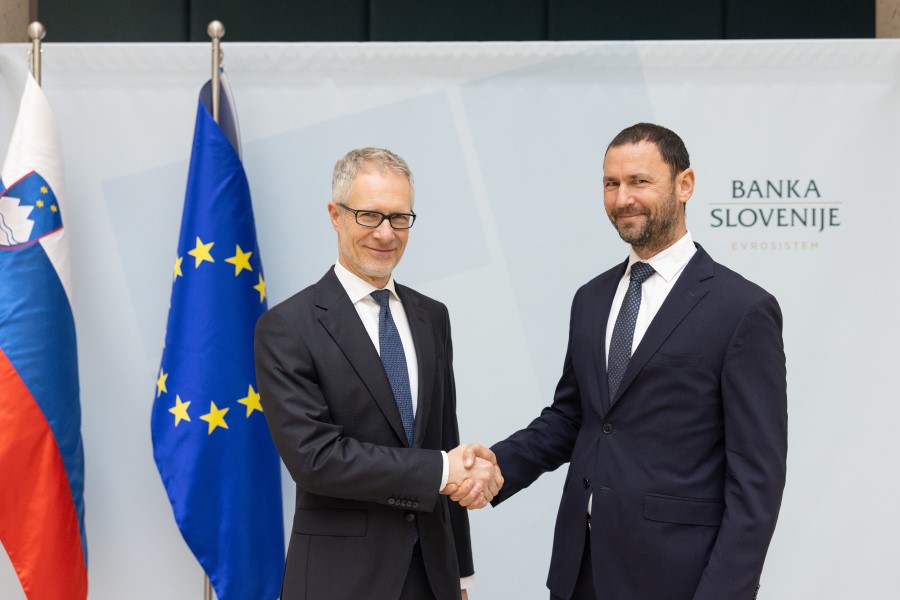
By David Barwick – FRANKFURT (Econostream) – European Central Bank Governing Council member Primož Dolenc on Wednesday said that the ECB’s adverse scenario was more likely than the baseline to become the euro area’s next baseline.
Dolenc, who heads Banka Slovenije, told Reuters, “My personal impression is that baseline scenario appears to be more like a best-case scenario for the future and probably the current adverse scenario is more likely to be our next baseline.”
He warned that second-round effects could emerge faster than in the last inflation episode because households and firms still remembered the 2022 inflation spike.
“Second-round effects might not take as long to take hold as in our last inflation episode,” Dolenc said. “People and firms have fresh memory of the inflation spike in 2022. And this is one of our biggest worries.”
Dolenc said the ECB should not react to short-term price spikes, but should be ready to move if higher energy prices started spreading into other goods and services or into wage demands.
“If there is a sign that higher energy prices will seep into other parts of the economy fairly quickly, and inflation expectations will rise quickly because of the memory effect, then we would need to consider acting sooner rather than later, in part to preserve our credibility,” Dolenc said.
At the same time, he said it was not yet clear whether policymakers would have enough information by the April 30 meeting.
“We cannot say today whether we’ll have enough information by April 30,” Dolenc said. “If we don’t have enough information, then probably it would be worthwhile to wait until June, when we have updated projections for next three years.”
He also said the ECB would not simply follow market pricing.
“We will not be simply driven by market expectations,” Dolenc said. “But we will for sure do whatever we can to bring inflation down to our 2% target in the medium term.”