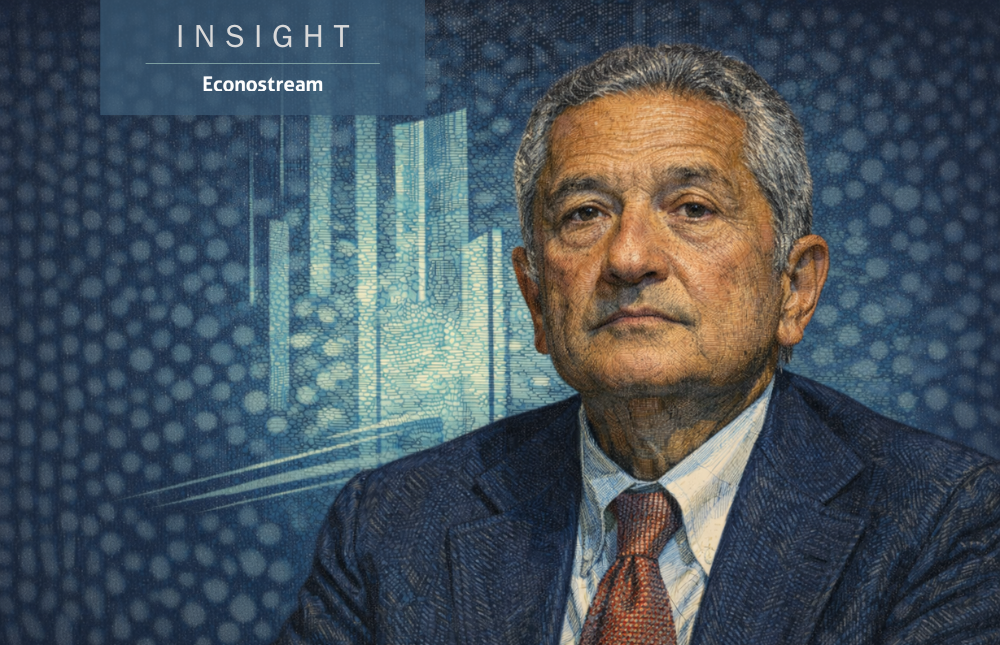
By Marta Vilar – MADRID (Econostream) – Fabio Panetta, usually one of the European Central Bank Governing Council’s more dovish voices (see our Hawk-Dove ranking), on Tuesday gave his first comments on the Middle East conflict in terms that were less dovish than those of some peers, even if he still stopped well short of backing hikes.
His remarks at the Ordinary Meeting of Shareholders of the Banca d’Italia, which he heads, did not sound like an attempt to minimize the shock’s inflation risk. On the contrary, Panetta made clear that even a quick ceasefire would not soon restore normality, warning that “a return to orderly conditions in the energy market would take some time.”
He also did more than note higher oil and gas prices, pointing to possible “significant” increases in commodity prices more broadly and to supply chain disruption that could raise the cost of intermediate goods, a formulation that leaves room for a more persistent inflation problem than a simple headline energy spike.
Just as notably, he acknowledged that short-term expectations for both inflation and interest rates had risen. But he left the policy implication unstated. Panetta said the ECB should “monitor expectations closely” and prevent a wage-price spiral, without saying outright that tighter policy would be needed to do so.
Panetta did not challenge market pricing for tighter policy, but neither did he validate it. He identified the risk, accepted the need for vigilance and left the next step open.
He likewise avoids the more clearly dovish use others have made of historical analogies. Panetta explicitly warned against alarmist comparisons with the 2022 energy shock, but he did not invoke past episodes to suggest that the ECB risks overreacting.
In that respect, he sounded less dovish than Bank of Finland Governor Olli Rehn, who last week cited the 2011-2014 oil shock after the Arab Spring to stress that the ECB eventually had to reverse the hikes it delivered then.
Nor did Panetta echo the softer line taken by Banco de España Governor José Luis Escrivá, who on March 20 said such shocks can fade and “do not necessarily entail a change in interest rates.” Panetta offered no look-through argument of that kind.
The comparison with Banque de France Governor François Villeroy de Galhau is different. Villeroy has been willing to say the ECB should act “if and when necessary” and has also pushed back against what he sees as excessive market conviction about the timing of the next move. Panetta avoided both explicit hawkishness and explicit resistance to market pricing.
The speech thus matters less for what Panetta endorsed than for what he did not. He did not sound like a policymaker trying to wave away the inflation risk from the conflict. But he also did not sound ready to back hikes. The result was a position somewhat nearer the Council’s center than Panetta’s usual place in the debate, while still clearly short of open support for tighter policy.