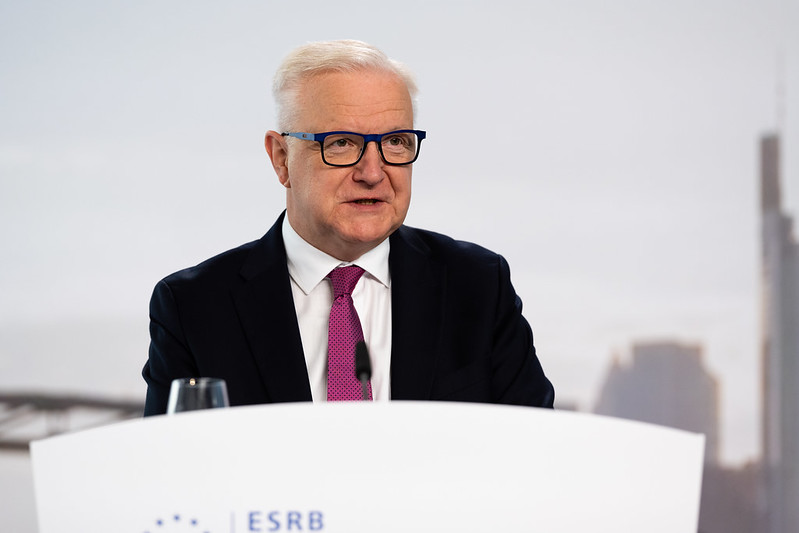
By Marta Vilar – MADRID (Econostream) – European Central Bank Governing Council member Olli Rehn said on Friday that inflation could undershoot more than forecast given the downside risks.
In prepared remarks at a press conference at the Bank of Finland, which he heads, Rehn said that the risk of undershooting “in the longer term should not be underestimated.”
Although inflation was currently around 2% and expected to stay there in the medium term, Rehn said “there is no room for complacency.”
Growth was still weak despite the recovery, and downside risks could push inflation even lower than currently expected, he said.
“This could also happen if the euro's appreciation this year starts to exert a stronger pressure on import prices, especially consumer goods prices,” he said. “Wage developments in the euro area also appear to be slowing down significantly, which will further reduce longer-term price pressures.”
Services inflation was showing signs of softening alongside wages, he said.
The ECB’s latest projections included an upward revision to growth, largely reflecting a stronger-than-expected first half, he said.
“However, the strong growth is partly temporary, as some of it has arisen from companies' efforts to prepare for tariff increases by increasing their exports to the United States in advance,” he said.
Weaker production and export figures were now expected in the months ahead, making it “difficult to identify the real growth momentum amidst the strong fluctuations”, he said.
Despite reduced uncertainty following the US-EU trade agreement, he noted that lingering doubts continued to weigh on growth.
“The negative impact of tariffs on growth figures is partly offset by the increase in defense spending,” he added.
Rehn projected “steady, albeit slow” growth in 2026 and 2027, supported by recovering consumption and the lagged effects of past rate cuts on investment.
There were upside and downside risks to growth, but these were now “more balanced” thanks to the easing of trade-related threats, even if geopolitical shocks like Russia’s war in Ukraine and its recent drone attacks could still undermine confidence and drag growth below expectations, he said.
Trade policy uncertainty was the main driver of weaker economic growth estimates, he said.
“I bring this up so that we don't fall into excessive optimism," he said. “Although the uncertainty has now diminished, it has not disappeared, and I don't believe it will disappear completely anytime soon.”
Related articles: