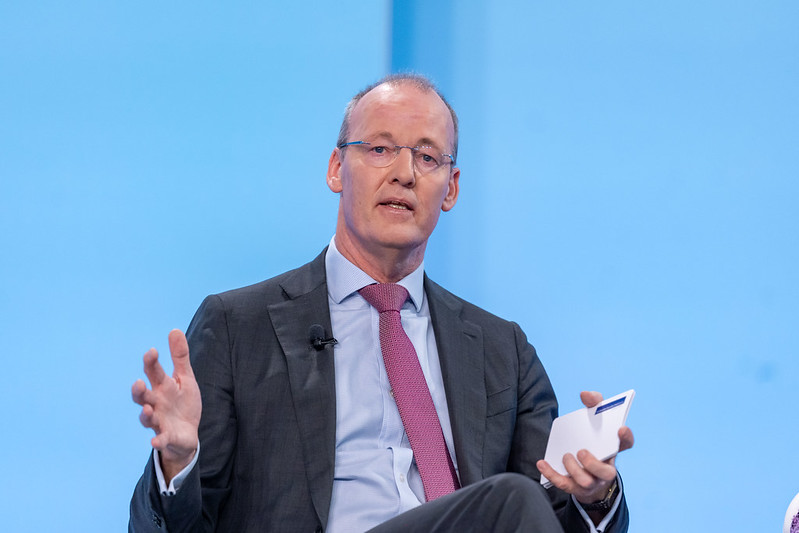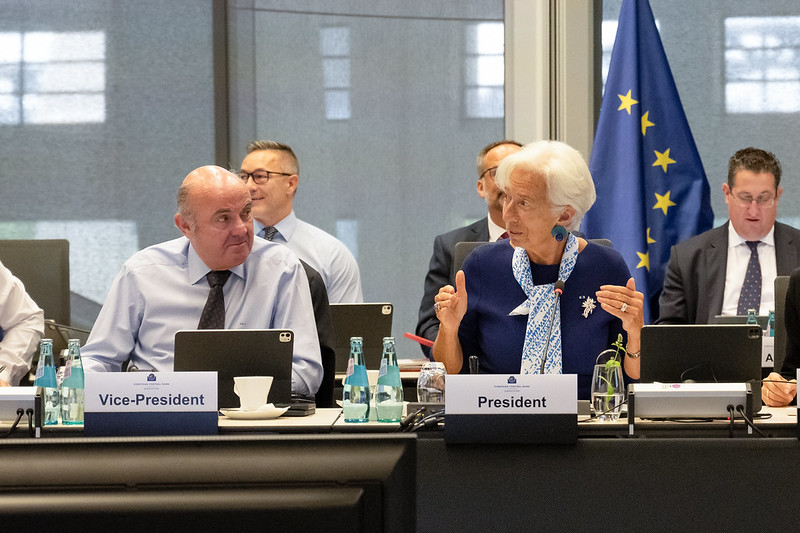
By Marta Vilar – WASHINGTON (Econostream) – The European Central Bank does not necessarily have to deliver on financial market expectations of ECB interest rate moves, according to Governing Council member Joachim Nagel.
Nagel, who heads the Deutsche Bundesbank, told Econostream in an interview (transcript here) conducted on Wednesday and updated on Friday that the ECB “needs to keep all options open, also for April,” adding that the situation in the Middle East could change daily.
He pointed to elevated uncertainty surrounding the conflict, particularly regarding the prospects for a “lasting solution regarding the Strait of Hormuz” and the risk that oil and gas prices could return to “very high levels.”
“I will come to a conclusion when the Governing Council meets at the end of this month, and I see no merit in restricting ourselves now,” he said. “We should wait, analyze all relevant data, and see what happens over the next two weeks.”
Nagel said Governing Council members all assessed the situation in a similar way, “with broad support for keeping all options on the table,” and making decisions based on incoming information.
Given current volatility, it was “all the more important to remain flexible and agile,” he said.
“With regard to market expectations for oil and gas prices, we are currently between the baseline and the adverse scenario,” he said. “However, this can change again very quickly, with prices moving in either direction.”
The effects of the current energy shock on medium-term inflation were “still very uncertain,” he said.
Asked if the ECB would at some point have to deliver on market expectations of rate hikes, Nagel pushed back against this idea, asserting that “[w]e do not have to deliver on specific expectations.” Financial markets currently understood the ECB’s reaction function “very well and, therefore, their rate expectations respond to incoming news,” he added.
“Markets know that monetary policy acts with a broader perspective: if current price increases spill over to medium-term inflation, e.g. via higher longer-term inflation expectations, we would have to act,” he said.
Referring to his earlier comment that a rise in inflation expectations was “conceivable,” Nagel said this meant policymakers “should not exclude anything and should be prepared for different scenarios.”
His assessment would depend on incoming data, he said, noting that some survey results would only become available shortly before the Governing Council’s decision.
Nagel also said the current situation differed markedly from the 2021–22 inflation shock, when price pressures were already elevated due to the post-pandemic reopening. Now, with inflation close to target, the ECB was “in a much better starting position,” he said.
Asked about stagflation risks, he said such concerns were “overstated,” pointing out that the IMF’s projection of slightly slower German growth in 2026 was “not stagflation, not in Germany and not in the euro area, where the IMF expects growth of 1.1%.”
“We should avoid creating self-fulfilling prophecies,” he said.
On his chances of succeeding Christine Lagarde as ECB President, Nagel said that “every central banker on the ECB Governing Council probably has the right skills to take over the top job in the Eurosystem” and that external candidates with different profiles could also be contenders.