
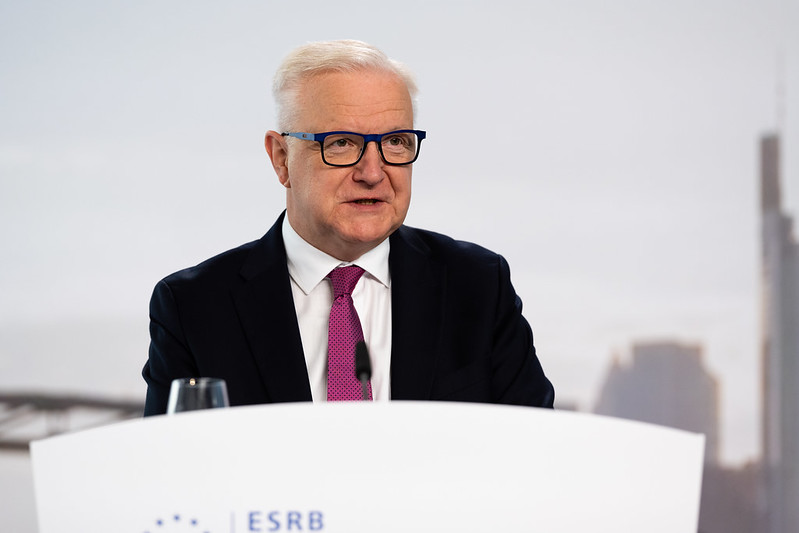
By David Barwick – FRANKFURT (Econostream) – European Central Bank Governing Council member Olli Rehn said Thursday that euro area inflation remained driven primarily by energy prices, with no clear evidence so far of broader inflation pressures or second-round effects, although upside risks may be increasing.
Rehn, who heads the Bank of Finland, said in a presentation to OMFIF that wage growth remained moderate and that “second-round effects are absent, so far.”
He described inflation as remaining above target and said that “the energy shock is not over yet.”
Rehn called the overall inflation picture “mixed” and “subject to a great deal of uncertainty,” with “no clear signs of inflation becoming broad-based,” but he warned that “upward risks may be creeping in.”
The Middle East conflict, though its inflationary impact had so far been less than feared, was dragging on and could have persistent consequences for energy markets, he said. Geopolitical risk and political fundamentals could lead to a more permanent increase in Middle East oil prices and refining margins, while strategic shipping routes remained vulnerable.
At the same time, Rehn said the euro area economy had remained resilient despite the latest energy shock, supported by defence and infrastructure investment, improving consumer confidence and increased AI-related activity in digital services, business investment and exports. Uncertainty nevertheless remained elevated because of the Middle East conflict and volatile energy prices, he said.
On wages, Rehn said euro area wage inflation was projected to remain around current levels in the second half of 2026.
“The ECB will provide a steady hand amidst the uncertainty,” he said.
Referring to last week's decision by the ECB to increase rates, Rehn said that "[b]oth the inflation outlook and the risks surrounding it supported a rate hike."
The hike was "clearly warranted and it supports the stabilization of inflation back to our target," he added.
Rehn expressed support for the ECB's data-driven, meeting-by-meeting approach, rejecting any pre-commitment to a particular rate path.
Rehn also argued that Europe faced a broader strategic challenge encompassing common defence, the green transition and productivity growth. He said Europe needed greater joint investment and procurement in defence, a more resilient and competitive energy system and stronger productivity growth through human capital, deeper capital markets, innovation and fewer regulatory barriers.
On artificial intelligence, Rehn said Europe’s biggest opportunity lay in adoption across the private and public sectors, which could raise productivity and competitiveness, while warning that Europe was also exposed to any repricing of U.S. technology assets.
- The author of this story can be contacted at david.barwick@econostream-media.com