
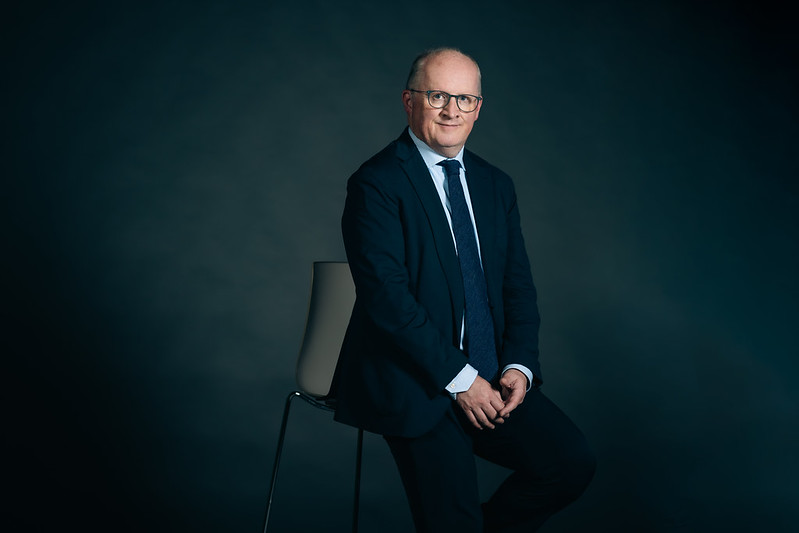
By David Barwick – FRANKFURT (Econostream) – European Central Bank Executive Board member Philip Lane said Friday that the current energy shock was too large to ignore but had not reached a “red-alert” level requiring rapid action, with policymakers continuing to calibrate interest rates meeting by meeting.
“What we’re saying now is this is a medium shock. It’s not so small you ignore it. It’s not, for now, at the kind of red-alert level,” Lane said during an on-stage interview in Donegal, Ireland.
Small energy shocks could be allowed to unwind on their own, while the large shock four years ago required a major tightening campaign that took ECB rates to 4%, he said. The current shock fell between those cases, he said.
“We really mean it when we say meeting by meeting, data dependent,” Lane said when asked whether June’s rate increase was likely to prove a one-off.
Lane said the ECB would be watching whether oil and gas prices remained elevated and whether negotiations produced a more durable release of supplies through the Strait of Hormuz.
“There has been a big increase in oil prices, and now what’s been happening recently is a fairly big increase in gas prices as well,” Lane said.
“The question is, by September, will they remain at the high levels they are now, or will there be some kind of a more durable negotiation to release supply from the Strait of Hormuz? So that’s a big issue,” he said.
So far, the inflationary impact had been concentrated in fuel prices and reached petrol pumps quickly, Lane said. The ECB would also assess whether companies could absorb higher utility bills or began passing them through more broadly, he said.
“That’s the basic question: how much can firms absorb versus at what point will they say, ‘Look, we do have to increase the price basically of everything to catch up’?” he said.
The issue would be monitored over the summer and into the autumn, Lane said. Market-based measures suggested inflation would remain above 2% until spring 2027, he observed.
“They think inflation will be above 2% until spring next year. So this is something that’s going to be around for a while,” he said.
A survey of economists at investment firms and banks showed them divided over whether the ECB would raise rates in September, Lane said.
“What they are predicting is a split — a split on whether we will raise rates in September or not — and that reflects the fact there is uncertainty,” he said.
Lane said the ECB would respond to developments without overreacting or underreacting.
“We’re going to go meeting by meeting. We’re going to be data dependent. We’re not going to give a vision about where we’re going to be a year from now or two years from now, because we need to be reactive to how the world is unfolding,” he said.
“Right now, inflation jumped from 2% to about 3% because of the Gulf War, and what we’re saying is we will make sure that we will guide inflation back from where it is now, about 3%, back to 2% over, let’s say, the next year or so,” Lane said.