
By Marta Vilar – MADRID (Econostream) – European Central Bank Governing Council member Joachim Nagel on Friday said that the ECB must be vigilant, open and keep all options on the table given the unpredictability of the Middle East conflict and energy shock.
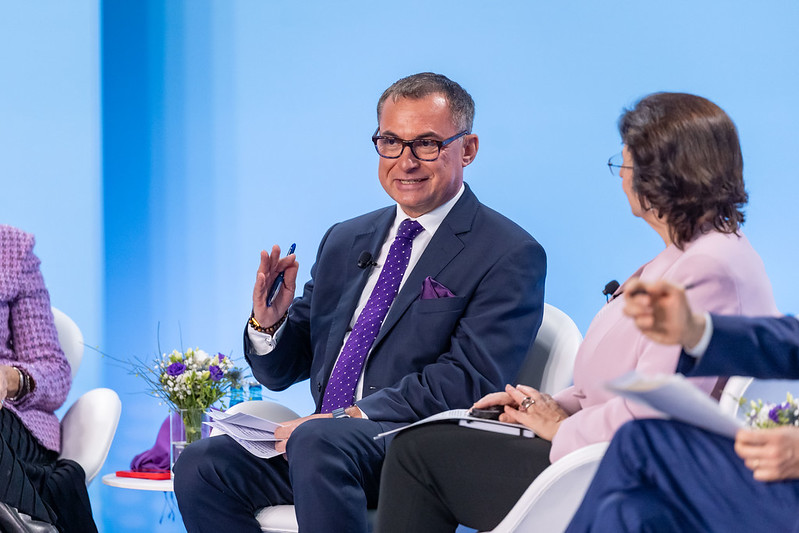
Speaking at a panel discussion in the Les Rencontres Économiques in Aix-en-Provence, France, Nagel, who heads the Deutsche Bundesbank, said he had never experienced political pressure to alter monetary policy during his four years as president of the Bundesbank.
“I never felt pressure since I'm president of the Bundesbank, this is now for four years, [from] governments [that] came up to me and asked me to do, maybe lower rates or something like this,” he said. “I think it is pretty clear what our mandate is.”
Nagel argued that there was a widespread misconception that some of the ECB’s instruments were designed to lower borrowing costs for specific sovereigns, stressing that this had never been their purpose.
“All what we are doing in the Governing Council is monetary policy,” he said. “All the instruments that we created during the financial crisis, all has to do with our mandate, price stability.”
He also firmly rejected any suggestion that the ECB should raise its inflation objective above 2%, warning that doing so would undermine the institution’s credibility.
“Changing your target, maybe going from 2% to 3%, then you're losing trust,” Nagel said. “That would end up in a de-anchoring of inflation expectations, and this is very, very dangerous.”
He said the ECB had to raise interest rates in June because it had no alternative, with inflation remaining “too high” even under the mildest scenario.
“The retreat of the energy prices, oil prices came as a surprise,” he said, adding that the experts he had spoken to had not expected such a decline.
“We do not know if there is really a peace agreement coming,” he said. “So, we should be vigilant, we should be open whatever might come, so keeping our optionalities.”
Nagel said the ECB should continue to take decisions on a meeting-by-meeting basis and remain pragmatic.