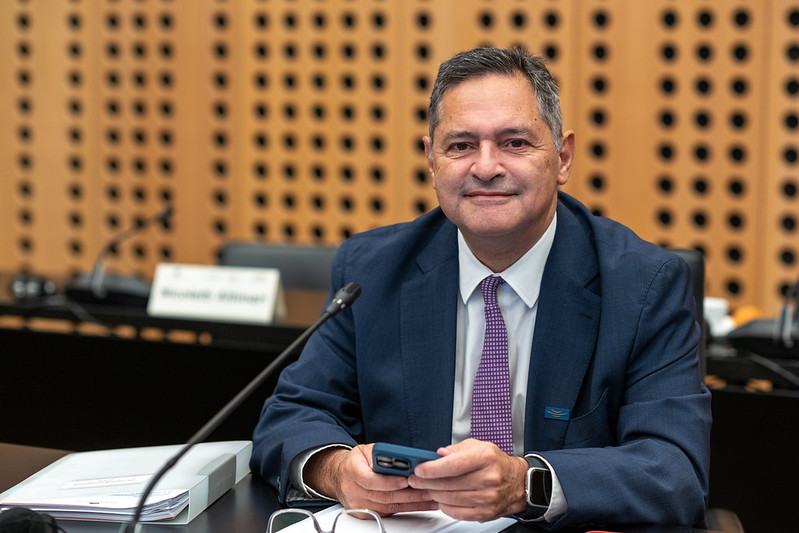
By David Barwick – FRANKFURT (Econostream) – European Central Bank Governing Council member Christodoulos Patsalides said in an interview published Monday that worsening inflation risks were pushing the ECB toward a possible June rate hike, though he cautioned that any move would depend on incoming data and would not necessarily open a new tightening phase.
Patsalides, who heads the Central Bank of Cyprus, told MNI that rising oil prices and heightened uncertainty had strengthened the case for higher rates.
“As things stand, things are worsening,” he said, according to the news agency. “So, things are pointing to a raise in interest rates.”
Still, the ECB remained committed to its meeting-by-meeting approach and was not pre-committing to a June move or to further hikes beyond that, he said.
Policymakers were now trying to assess whether higher energy prices would remain a supply shock or spill over into broader inflation dynamics and demand conditions, he said.
“What we're observing is a rising [oil] price, and this is evident,” Patsalides said, according to MNI. “The question is whether these rising prices will emigrate into the demand side of the equation, in which case the ECB and monetary policy would have an impact.”
“If it's merely a supply shock and it doesn’t spill over to the demand side, then acting pre-emptively ... could be costly,” he said. “It could be detrimental to growth.”
The ECB’s decision to leave the deposit rate at 2% at its April meeting reflected a preference to wait for fresh projections and additional data in June before deciding whether to move, Patsalides said.
Geopolitical developments had pushed policymakers into “a grey area” marked by repeated supply shocks and global political volatility, he said.
“Persistent rising prices increase the risk of infiltration into core inflation,” he said.
At the same time, there were “certainly scenarios” under which the ECB could keep rates unchanged in June, including a quick end of the conflict, anchored inflation expectations and limited spillovers to the economy in general, he said.
“So, this is a scenario under which the ECB would not have to raise interest rates,” he said.
Patsalides rejected the idea that a June hike would be the beginning of sustained tightening.
“Moving in June, that doesn't mean that we are entering a new cycle,” he said.
Where oil prices stabilize after the crisis, and what this would imply for second-round effects, were critical questions, he said.
“If there's an end to this conflict, the question is, what would be the landing price of oil?” Patsalides said. “And what does this mean for second-hand effects? This is another sort of a longer-term question that needs to be taken into consideration.”