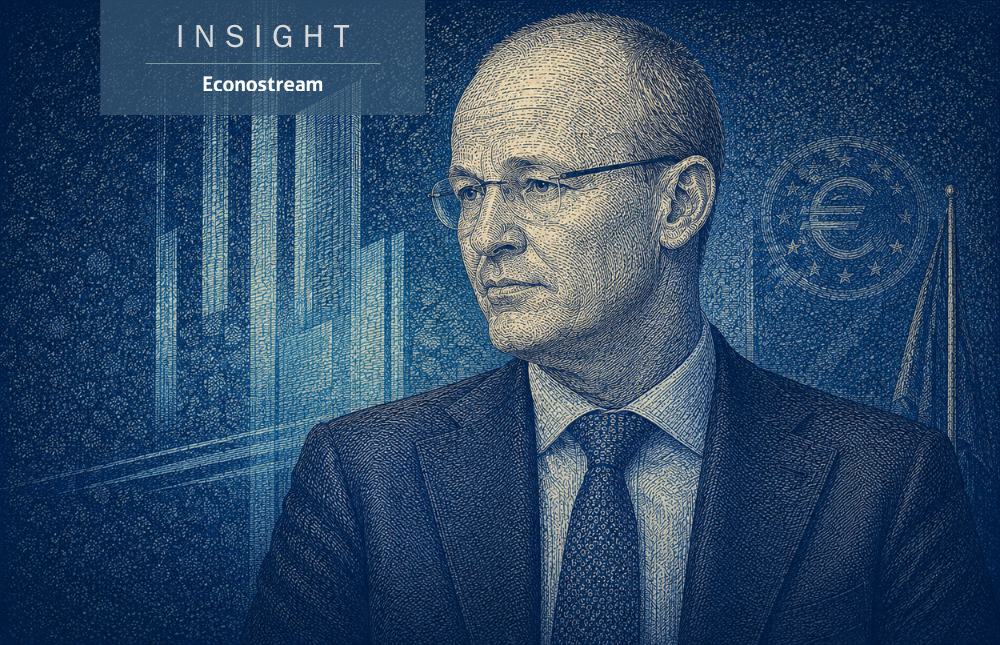
By David Barwick – FRANKFURT (Econostream) – European Central Bank Governing Council member Joachim Nagel on Tuesday said artificial intelligence was rapidly changing the workplace but was not, for now, eliminating jobs on net in Europe, while arguing that central banks also had to keep pace with digital technologies.
Nagel, who heads the Deutsche Bundesbank, said in a speech at DHBW Karlsruhe that AI had become a “real gamechanger” as automation increasingly extended beyond manual work to cognitive tasks such as programming, accounting, customer service, and research.
“Standardized knowledge work is losing its standalone value,” he said. “Much of that can already be done faster and more cheaply by AI today.”
Even so, Nagel said technological upheavals had historically created more jobs than they destroyed, adding that ECB analysis suggested AI was not currently replacing employment in Europe overall. Companies already making intensive use of AI were, in most cases, even reporting higher employment, he said.
How this would evolve over the longer term remained unclear, he said, but work would increasingly involve oversight, judgment, and critical evaluation rather than routine execution. “Judgment will become a core competence,” he said.
For the Bundesbank itself, digital expertise had become indispensable, according to Nagel, who said the institution was pressing ahead with a broad modernization program. He pointed to the central bank’s use of models and large datasets for monetary policy preparation and forecasting, as well as its work in banking supervision, market oversight, and payments.
“It is clear to me that a central bank, too, must be at the cutting edge of digital technologies,” he said.
Nagel also struck a cautiously upbeat note on AI adoption in Germany, saying Bundesbank company survey data showed rapid growth in generative AI usage or planned usage. The share of firms using generative AI or intending to do so by year-end had risen from about one quarter for 2024 to more than half for 2026, he said.
Still, the bigger challenge began once firms moved beyond the low-cost entry phase and tried to integrate AI more deeply into workflows, he said. That required not just higher investment, but also organizational and technical change, employee training, and decisions about data protection, confidentiality, and liability.