
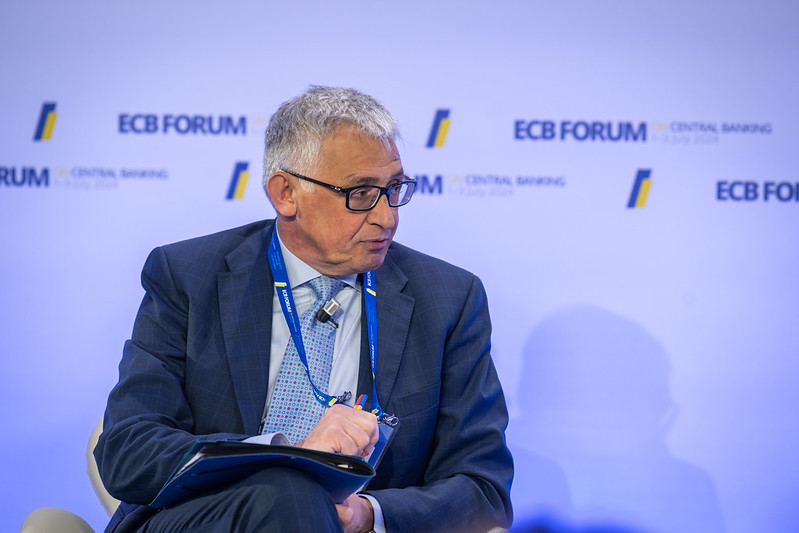
By David Barwick – FRANKFURT (Econostream) – European Central Bank Executive Board member Piero Cipollone on Sunday said the ECB does not target the euro’s exchange rate, while treating it as an input into the staff inflation outlook that guides policy.
“We do not have a specific target for the exchange rate,” Cipollone said in an interview with Cyprus News Agency, adding that the ECB takes the exchange rate into account in its projections and will assess the impact through the next forecast round.
Recent euro strength, he said, has largely returned to levels seen in previous months.
The interview focused mainly on the digital euro, with Cipollone stressing the ECB will not issue one “until we have the legislation in place.”
“In short, with the digital euro we are creating a digital version of cash,” he said, arguing that it would preserve citizens’ ability to pay with central bank money in settings where cash cannot be used, including online.
Simplicity was presented as the core consumer benefit, with Cipollone describing a single instrument that can be used across the euro area, including an offline option designed to function even without internet connectivity or electricity.
Lower merchant costs were another theme, with Cipollone saying the ECB would not charge scheme fees and that cheaper acceptance costs would particularly benefit small businesses.
Resilience and strategic autonomy also featured, with Cipollone noting that “almost 70% of card-initiated transactions are processed by non-European companies,” and arguing that Europeans should be concerned about reliance on non-European payment providers.
On timing, Cipollone said euro-area institutions are progressing on legislation and that the Eurosystem is working to be ready to issue a digital euro by mid-2029 if the legal framework is in place, with a pilot foreseen in 2027.
Addressing banks’ concerns about deposit outflows, he said safeguards include non-remuneration, holding limits, and a “waterfall” mechanism that would pull funds from a payer’s bank account for most online transactions, while limiting access to natural persons rather than merchants.
Privacy, he said, is central to the design, with the ECB seeing only encrypted payer/payee codes online and, offline, transaction details known only to the payer and payee. “We will not know who is paying whom,” Cipollone said.