
By David Barwick – FRANKFURT (Econostream) – The euro area remains exposed to elevated financial stability risks despite resilient markets and strong bank fundamentals, the European Central Bank said Wednesday in its latest Financial Stability Review.
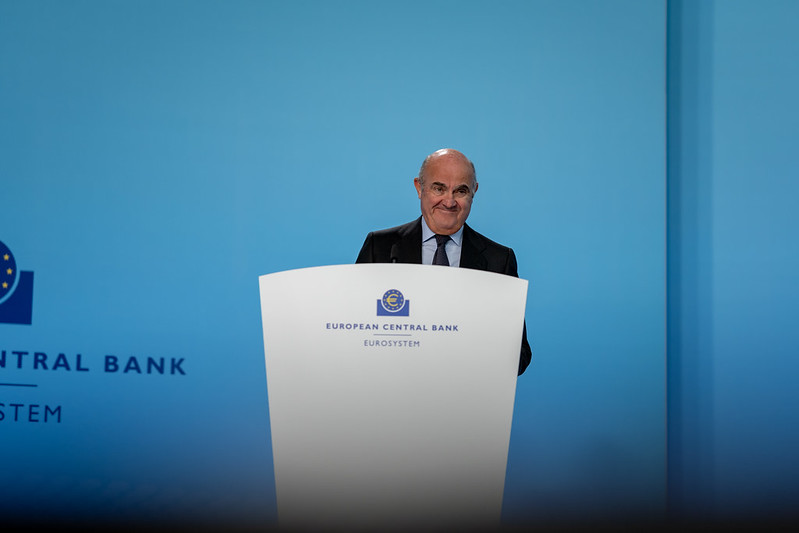
Vice President Luis de Guindos warned in the foreword of the review that although the threat of a broad trade war had eased since May, “[t]he international environment remains volatile,” and the openness of the euro area meant “strains ahead” could not be ruled out.
He noted that global equity markets had reached new highs, even as stretched valuations and concentrated exposures raised the potential for abrupt reversals. “Market sentiment could shift abruptly, not only if growth prospects deteriorate but also if technology sector earnings – especially those of companies associated with artificial intelligence – fail to deliver on expectations,” he wrote.
Non-bank financial intermediaries were especially vulnerable due to concentrated U.S. exposures and liquidity mismatches in open-ended funds, the review said, adding that hedge-fund leverage and opacity in private markets could “amplify market stress” in a downturn.
Fiscal fundamentals in several euro area countries also remained weak, the FSR said, with the investor base having shifted toward buyers “more price-sensitive” than in the past. De Guindos cautioned that fiscal slippage could test confidence and that a repricing of sovereign risk “would be more difficult to absorb today than previously.”
The review highlighted three core vulnerabilities: stretched valuations and market concentration, sovereign funding risks driven by fiscal pressure and the potential for credit deterioration among tariff-exposed firms that could “undermine the performance of bank loans.”
Even as banks remain well capitalized and liquid, the ECB said sudden valuation adjustments could challenge non-bank balance sheets and trigger procyclical selling. The report reiterated the need to extend macroprudential oversight to non-banks and improve data availability, especially in private markets.
On sovereign finance, the ECB warned that higher defense spending, structural headwinds and increased issuance could lead investors to demand higher yields. Yield curves had already steepened as issuance expectations grew, the FSR noted.
The report also pointed to a weakening of U.S. safe-haven status as fiscal concerns rose, saying this had “weakened the safe-haven properties of U.S. Treasuries and weakened the U.S. dollar,” increasing the risk of destabilising capital-flow swings.
In its concluding assessment, the ECB said that even a modest shock could force sharp valuation adjustments and that liquidity and leverage in the non-bank sector could amplify market stress. Sovereign funding conditions, it added, may become more sensitive to shifts in sentiment as issuance rises and investor tolerance narrows.
Banks remain resilient for now, the review said, but spillovers from U.S. markets, tariff-exposed corporate credit and a disorderly repricing of risk still pose a potential test to the system.