
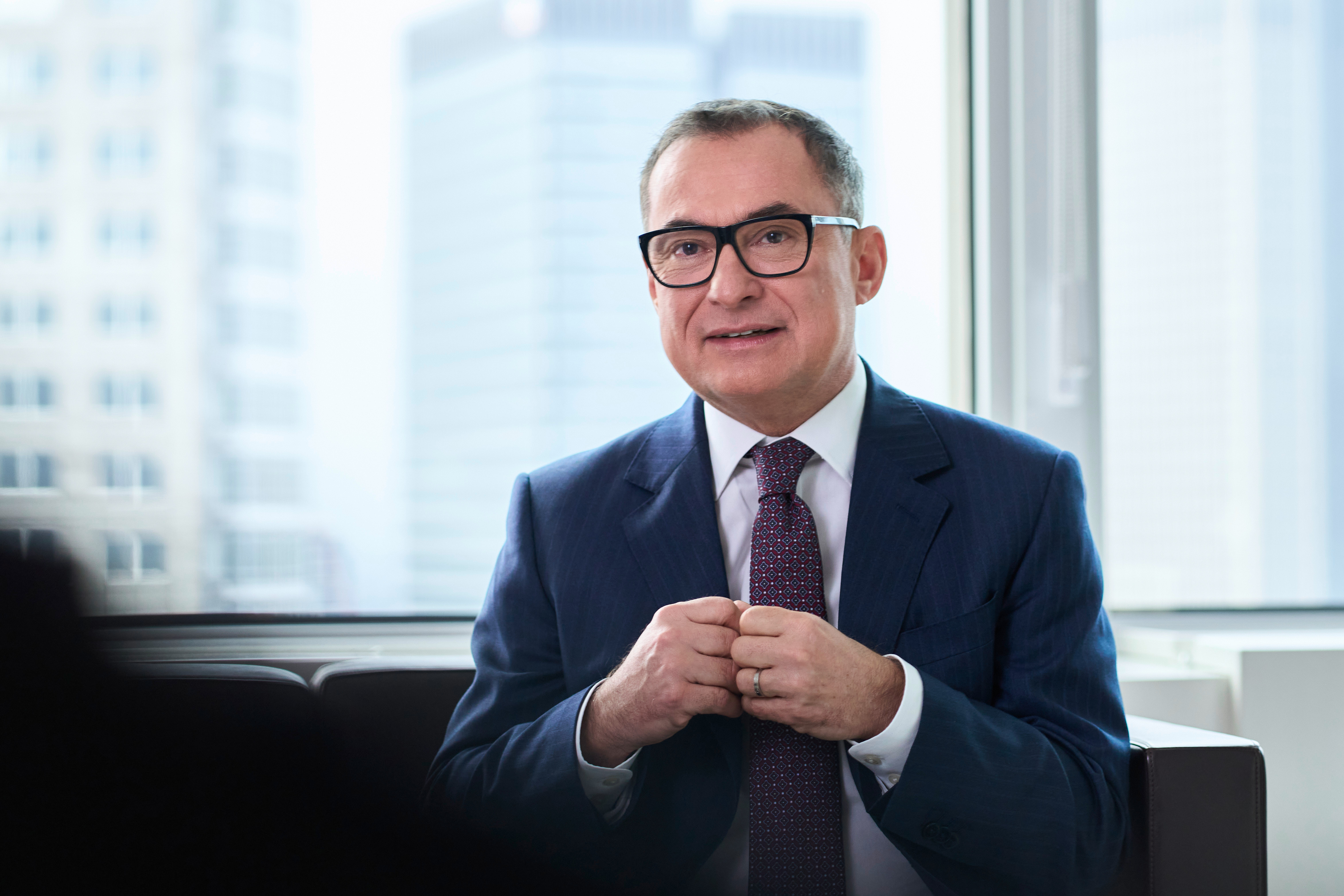
By David Barwick – FRANKFURT (Econostream) – European Central Bank Governing Council member Joachim Nagel said Tuesday that another ECB interest rate increase in December would probably be unavoidable, arguing that the inflation outlook had deteriorated.
To be sure, wages had not yet reacted to high inflation, he said. “However, a rate increase in December is, from today’s perspective, very likely necessary,” Nagel, who heads the Bundesbank, said in a speech in Berlin.
The ECB Governing Council left interest rates unchanged last Thursday after raising them twice earlier this year, he observed, calling the pause justified by reason of the limited evidence so far of second-round effects from higher energy prices.
“High energy prices are not yet translating into higher wage demands, which would generate additional, broad-based price pressures,” he said.
However, Nagel said the inflation outlook had worsened since September and was moving toward the adverse scenario contained in the ECB’s September projections.
“From our perspective, it has now become very likely that inflationary pressure will turn out higher than expected in September,” he said.
Repeated energy price shocks could increasingly push up the prices of other goods and services and feed into wage demands, which in turn would create additional upward pressure on prices, Nagel said.
The Governing Council will next meet shortly before Christmas, when it will receive new Eurosystem staff projections extending for the first time through 2029, he noted.
“On that basis, we will decide,” Nagel said. “From today’s perspective, however, there is likely to be hardly any way around a rate increase if the inflation outlook does not improve significantly.”
Nagel said the renewed inflation pressure was primarily the result of continuing conflict in the Middle East and sharply higher energy prices. Monetary policy could do little against the initial impact of such supply shocks, he said, but had to prevent them from developing into broader inflation.
Nagel also used the speech to call for deeper European integration, saying Europe needed to act more cohesively to preserve its ability to determine its own future amid geopolitical tensions, intensifying international competition and technological change.
He called for remaining barriers in the European single market to be reduced, including in capital, energy and services markets, and argued that national approaches were insufficient in areas including defense and foreign policy.
Germany and France had a particular responsibility to drive European cooperation, Nagel said, even though the two countries would not always agree.
“National interests are best served when policy acts jointly at the European level,” he said.