
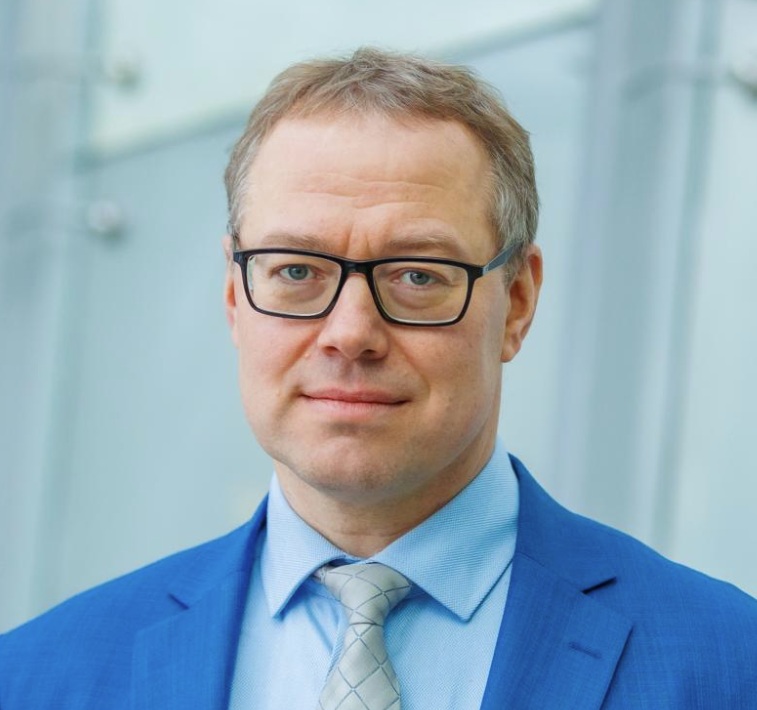
By David Barwick – FRANKFURT (Econostream) – European Central Bank Governing Council member Ülo Kaasik said Friday it was understandable that financial markets were pricing further ECB interest rate increases given the significant risk that inflation could prove faster and more persistent than projected.
Kaasik, who heads Eesti Pank, said in a blog post on his institution's website that the outlook nevertheless remained highly uncertain and developments in energy prices, financial markets and economic growth could quickly alter current assessments.
“The risk that inflation proves faster and more persistent than projected remains significant,” he said. “It is therefore understandable why financial markets are pricing in additional European Central Bank interest-rate increases to support inflation returning to the 2% target.”
The Governing Council left rates unchanged Thursday after raising them at its previous meeting, with Kaasik saying the relatively limited pass-through of higher energy costs to other goods and services had allowed the ECB to raise rates at a measured pace.
At the same time, policymakers remained ready to take the interest rate decisions necessary to bring inflation back close to target, he said.
According to Kaasik, euro area inflation reached 3.8% in September, but the acceleration was mainly driven by higher energy prices, while inflation excluding energy stood at 2.3%.
He said the impact of wars on oil and other energy prices had intensified, with European natural gas prices rising to nearly €100 per megawatt hour, almost three times their level at the start of the year, while oil had climbed above $115 a barrel.
If the energy market outlook failed to improve, euro area inflation could exceed 4% in the coming months, Kaasik said.
For monetary policy, however, the more important issue was whether higher energy prices began affecting households’ and companies’ inflation expectations and subsequently fed through into wages and the prices of other goods and services, he said.
Kaasik also pointed to rising long-term borrowing costs in Europe, with France receiving particular attention from investors.
As government borrowing became more expensive, financing costs for companies and households could also rise over time, slowing economic growth and potentially reducing inflationary pressure in the coming years, he said.
The rapid increase in government borrowing costs was also a warning for highly indebted countries, according to Kaasik, who noted that France could under some scenarios be spending an additional 1%-2% of GDP on debt servicing five years from now compared with this year.
Despite the difficult external environment, the euro area economy had remained in relatively good shape and growth should continue in the fourth quarter, supported by government defense and infrastructure spending, the global artificial-intelligence investment boom, resilient confidence and credit growth, he said.
Kaasik said the euro area therefore faced opposing forces, with higher energy prices boosting inflation and government spending supporting activity while higher long-term borrowing costs made investment more expensive and slowed growth.