
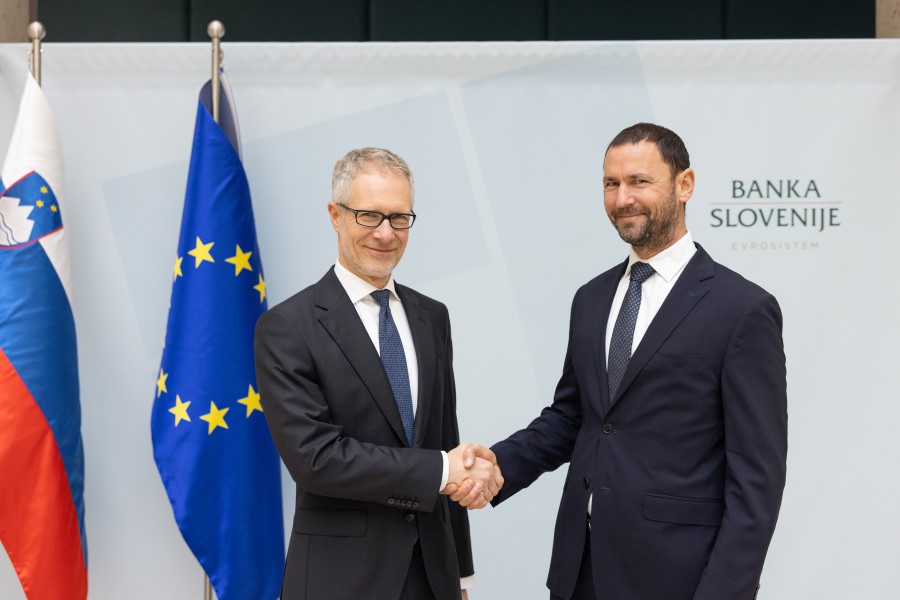
By David Barwick – FRANKFURT (Econostream) – The European Central Bank’s current interest rate level provides flexibility to respond to different possible outcomes of geopolitical tensions and their implications for inflation, ECB Governing Council member Primož Dolenc said Friday.
“We assess that this level of interest rates gives us the flexibility to respond appropriately to all possible outcomes of geopolitical tensions and their potential consequences for inflation,” Dolenc, who heads Banka Slovenije, said in a statement following Thursday’s ECB Governing Council meeting.
Policymakers would continue to decide the appropriate monetary policy stance meeting by meeting, he said.
Euro area inflation rose to 3.8% in September, largely reflecting an acceleration in energy inflation to 18.9%, while core inflation remained considerably lower at 2.5%, Dolenc noted.
“This suggests that, for now, the current shock is not yet feeding through into broader inflationary pressures via second-round effects,” he said.
Dolenc said economic activity had meanwhile remained resilient and broadly based, with favorable developments from the second quarter continuing through the third quarter and into the start of the fourth.
Investment related to artificial intelligence as well as public spending on defense and infrastructure were providing important support to demand, he said.
Higher energy prices nevertheless posed upside risks to the inflation outlook and downside risks to economic growth, while low energy inventories ahead of winter increased the danger of more persistent inflationary pressure, he said.
Market-based inflation expectations suggested euro area inflation could remain above 2% in the coming years, Dolenc said.
Financial conditions had also tightened, reflecting wider sovereign bond spreads amid concerns about political risks and fiscal sustainability in some countries, as well as a more visible decline in AI-sector equity prices, he said.
That tightening had been partly offset by somewhat lower expectations regarding the restrictiveness of ECB monetary policy, he said.
Dolenc said future Governing Council decisions would remain aimed at stabilizing inflation at 2% over the medium term and would depend on the inflation outlook and associated risks, underlying inflation dynamics and the strength of monetary policy transmission.