
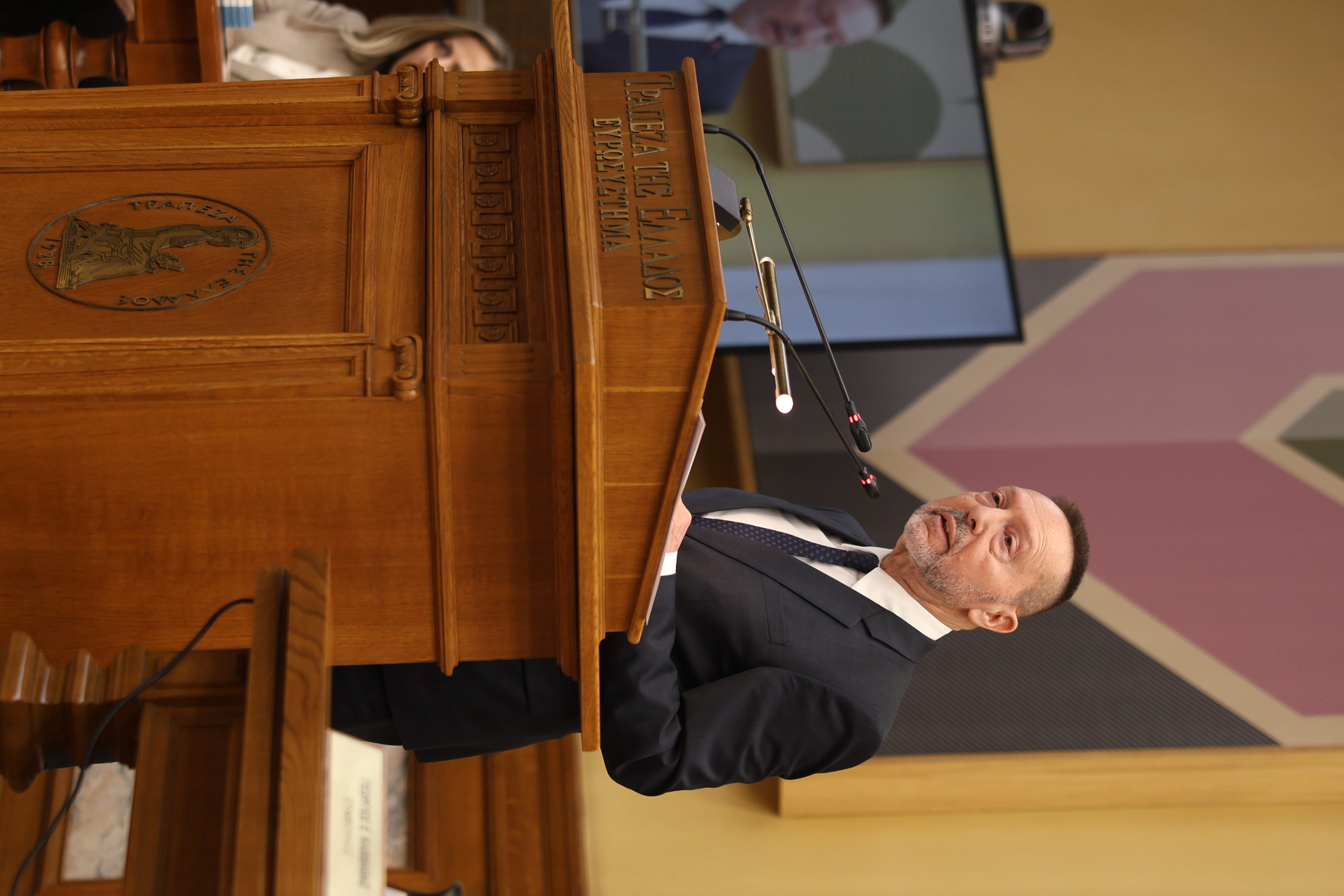
By David Barwick – FRANKFURT (Econostream) – European Central Bank Governing Council member Yannis Stournaras said euro area inflation was well above the ECB’s 2% target and suggested that further interest rate increases would be gradual, pointing to the success of gradual tightening in bringing down inflation previously without causing a recession or threatening financial stability.
The Bank of Greece governor said inflation had reached 3.8% and stressed the importance of keeping inflation expectations under control in an interview with Turkey’s Anadolu news agency published Sunday.
“Inflation is relatively high, that is, well above our target,” Stournaras said. “The target for the euro area is 2%, while according to the latest available data inflation has risen to 3.8%. Therefore, we need to reduce inflation.”
Stournaras said interest rates had previously been increased gradually, helping to reduce inflation without causing problems for banks, creating financial stability challenges or leading to a recession.
“I believe that this time too we will do the same,” he said.
Stournaras said supply side shocks posed a challenge for central banks because central banks and monetary policy were better suited to addressing problems originating on the demand side.
“I consider it necessary to keep inflation expectations in the euro area under control,” he said.
“For the time being, it seems that we have managed to do so, thanks to the credibility of the European Central Bank, which has been built with great effort over many years,” Stournaras said.
The main task now was to keep expectations under control until headline inflation declined and “ensure that they remain stabilized close to 2% over the medium term,” he said.
Turning to the global outlook, Stournaras said the main risks facing the world economy in 2027 would be the same as those it faced this year, citing supply and demand disruptions, fiscal difficulties in some countries and tariffs.
“I firmly believe in economic cooperation and not in trade restrictions,” he said.
Stournaras also addressed artificial intelligence, saying it was particularly important for the labor market and expressing hope that it would complement human labor rather than substantially replace it.
“Let us preserve the positive aspects of artificial intelligence and create mechanisms to offset its negative consequences,” he said.