
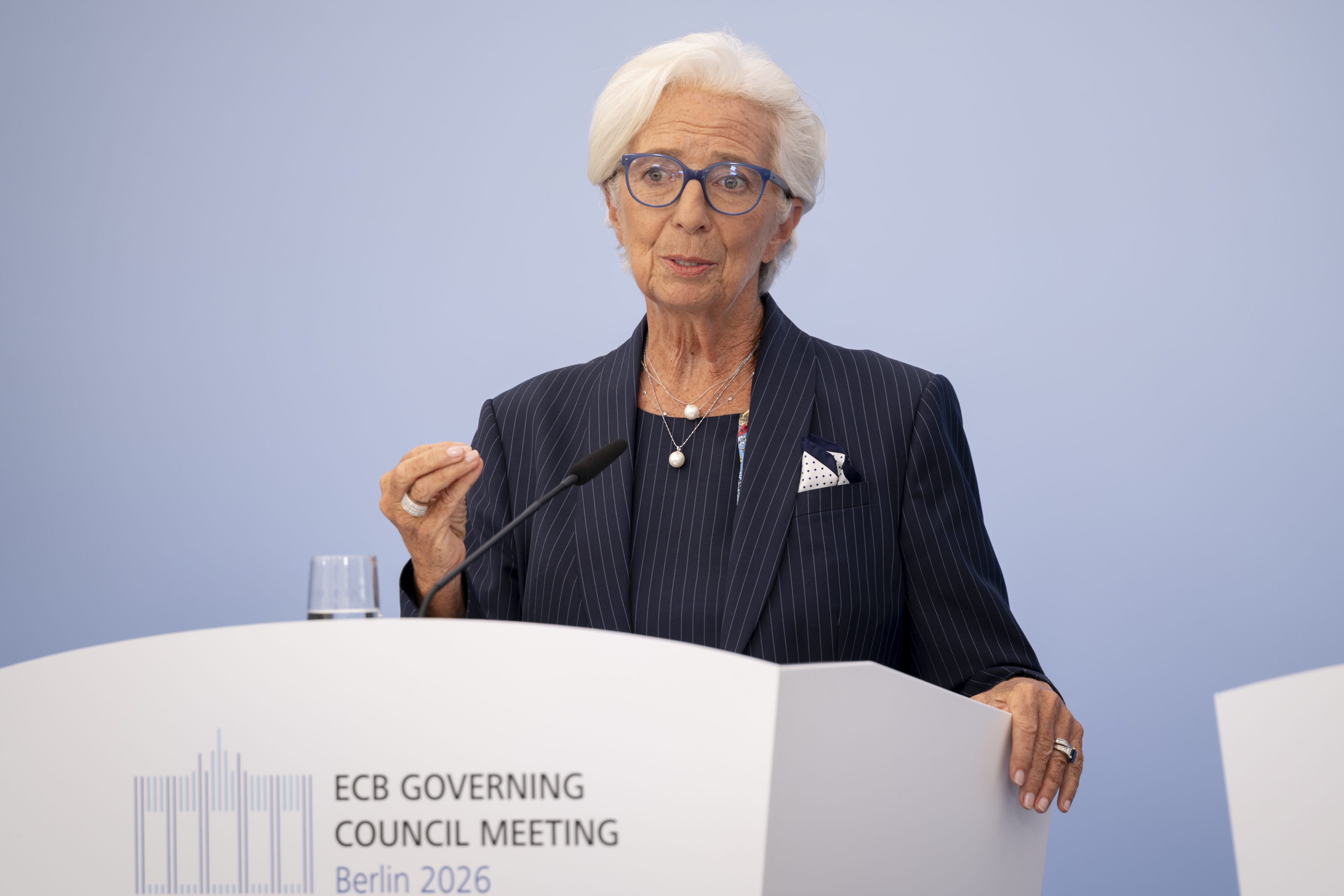
By Marta Vilar – BERLIN (Econostream) – European Central Bank President Christine Lagarde said on Thursday that the Governing Council’s decision to raise interest rates by 25bp was unanimous and a “no-brainer,” while reiterating that the move was “robust” across all the ECB’s scenarios.
Speaking at a press conference following the Governing Council’s external meeting in Berlin, Lagarde was asked about market pricing and the outlook for interest rates, saying that “markets do what they have to do” while the ECB does its own job.
She said that the Governing Council had focused solely on Thursday’s decision and had not discussed the future interest rate path.
“So, we […] have not actually debated at all any kind of future path, likelihood of this or likelihood of that,” she said.
Lagarde said the Governing Council was not taking a view on the direction of its next move, with future decisions to be determined at future meetings.
The decision to raise rates by 25bp in September was unanimous and a “no-brainer,” she said.
Late in the press conference, Lagarde described the rate increase as “robust” across all the ECB’s scenarios.
On the neutral rate, Lagarde described this level as “highly conceptual,” saying it was impossible to pinpoint the exact level of r* given that it depended on multiple, constantly changing variables and was generally defined in the absence of shocks — unlike the current environment.
“So, we are not attaching great importance in the current circumstances to the neutral rate,” she said.
Regarding the recent rise in bond yields, Lagarde described it as a global phenomenon driven by multiple factors.
Turning to the ECB’s latest projections, Lagarde said the central bank had been surprised by the resilience of the economy, with incoming data proving stronger than expected.
She said that, had data released after the projections’ cut-off date been incorporated, the ECB’s 2026 GDP growth forecast would have been even higher than 0.9%.
“Because Q2 was 0.6%, [it] came up as an upward surprise,” she said.
Lagarde said inflation had also surprised the ECB, but in the opposite direction, coming in “lower than we had anticipated,” particularly for food.
“But we believe that inflation will be longer-lasting than we had anticipated,” she added.
Headline inflation was now expected to return to target towards the end of 2027, supported by higher interest rates, Lagarde said.
On food inflation specifically, she said the ECB had been “quizzical” about its evolution following the downward revision compared with the previous staff projections.
“And, as I said, as much as energy prices have increased more than we had anticipated, food prices have increased less,” she said.
However, the ECB expected food prices to rise more strongly in the future as a consequence of “this longer-than-anticipated energy shock,” she said.
Lagarde said the ECB was “not seeing much” evidence of indirect effects from the energy shock, although there were “some” signs, which remained “contained.” There was no evidence of second-round effects, she added.