
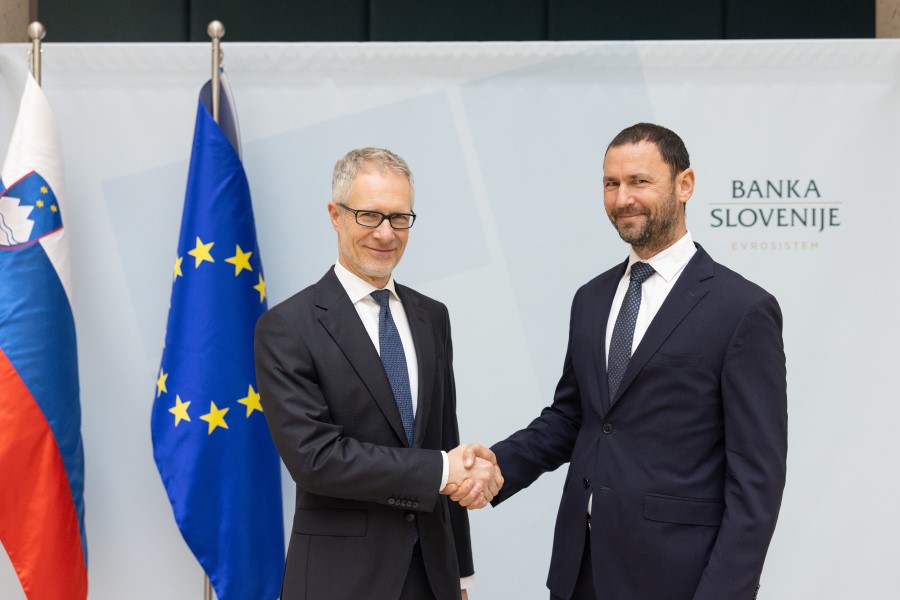
By David Barwick – FRANKFURT (Econostream) – European Central Bank Governing Council member Primož Dolenc said Friday that risks stemming from the Middle East conflict remained high and that euro area economic growth was continuing.
“The conflict persists despite a brief interim easing, while its outcome remains uncertain,” the Banka Slovenije governor said in a statement following Thursday’s monetary policy meeting.
“For now, the consequences are visible in selected economic indicators, primarily in higher inflation, while economic growth in the euro area remains broadly stable. Risks going forward remain high,” he said.
Against that background, the Governing Council had decided to leave interest rates unchanged after raising them by 25bp in June, Dolenc said.
“The deposit facility rate, which best reflects the monetary policy stance, therefore remains at 2.25%,” he said. “For future decisions too, we are maintaining our approach of deciding on monetary policy measures meeting by meeting.”
Dolenc said the latest macroeconomic data indicated that the energy shock was still being reflected mainly in higher inflation, while economic activity remained broadly stable.
Euro area inflation declined to 2.8% in June, largely reflecting lower energy inflation alongside somewhat lower core and food inflation, he said.
The fall in energy inflation followed a sharp decline in global oil prices after the agreement between the United States and Iran, while the latest escalation of the conflict had caused energy prices to jump again, Dolenc said.
Monthly activity indicators suggested that euro area economic conditions had improved during the second quarter following a marked deterioration at the beginning of the conflict, he said.
Growth remained supported by private consumption, investment in new digital technologies, public investment in defense and infrastructure and a partial recovery in exports, Dolenc said.
Energy prices remained elevated and volatile, while market expectations for short- and medium-term inflation were broadly unchanged and continued to point to a gradual decline toward 2%, he said.
“Money market participants therefore expect additional increases in the ECB’s key interest rates in the second half of 2026,” Dolenc said.
Future Governing Council decisions would remain aimed at stabilizing inflation at 2% over the medium term and would be based on the inflation outlook and associated risks, underlying inflation dynamics and the strength of monetary policy transmission, he said.