
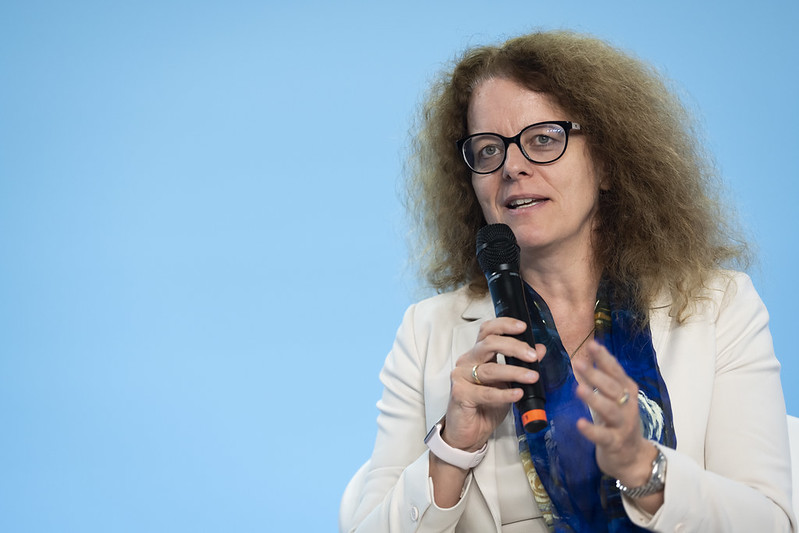
By David Barwick – FRANKFURT (Econostream) – European Central Bank Executive Board member Isabel Schnabel on Saturday presented the case for further monetary policy tightening, with her slides saying that the ECB was expected to raise interest rates further to bring inflation back to its 2% target over the medium term.
In a presentation titled “Is inflation back?” at the Petersberger Sommerdialog in Petersberg, Schnabel also highlighted upside risks to food, goods and services inflation, higher consumer inflation expectations and the risk that the recent energy shock could feed into broader inflation dynamics.
“ECB is expected to raise rates further to bring inflation back to 2% over medium term”, one slide said.
The presentation said that oil prices were expected to stay “persistently higher” as the Strait of Hormuz opened only gradually, while another slide said uncertainty remained high, but that the announced peace deal had made negative scenarios less likely.
The presentation showed latest oil and gas futures curves below the ECB’s June adverse and severe scenarios, but above the milder scenario in the case of oil.
The energy shock had hit the Eurozone “particularly hard but less than in previous oil price shocks”, according to another slide.
Schnabel’s presentation said the ECB’s June staff projections saw lower Eurozone growth and higher inflation because of the Iran war. Higher energy costs were weighing on confidence and private consumption, while growth was supported by government investment and the global AI boom, according to the presentation.
The labor market remained resilient, with cooling labour demand but tight labour supply, the slides said.
The presentation described the transmission of an energy price shock into consumer prices via direct effects, indirect cost effects, expectations, wages and pricing dynamics.
“Higher energy prices have knock-on effects, reinforced by supply chain pressures”, another slide said.
The presentation showed that downstream product prices had increased since the start of the Iran war, including for naphtha, jet fuel, diesel, gasoline, gas and Brent oil.
“Food, goods and services inflation are facing upside risks”, another slide said. The presentation showed inflation momentum for HICPX, non-energy industrial goods and services, with services inflation momentum still positive in May.
Food-price scenarios in the presentation showed upside risks if fertiliser-intensive commodities such as wheat and corn were affected.
Another slide said producers passed through part of higher input prices, “especially in manufacturing”, and showed June PMI input and output price indicators for manufacturing and services.
Consumer inflation expectations had increased, “but no sign of wage pressures yet”, the presentation said. The ECB wage tracker still pointed to wage growth easing toward the end of 2026, according to the slides.
The presentation also flagged financial stability risks, saying these were rising because of stretched risk-asset valuations and higher leverage.