
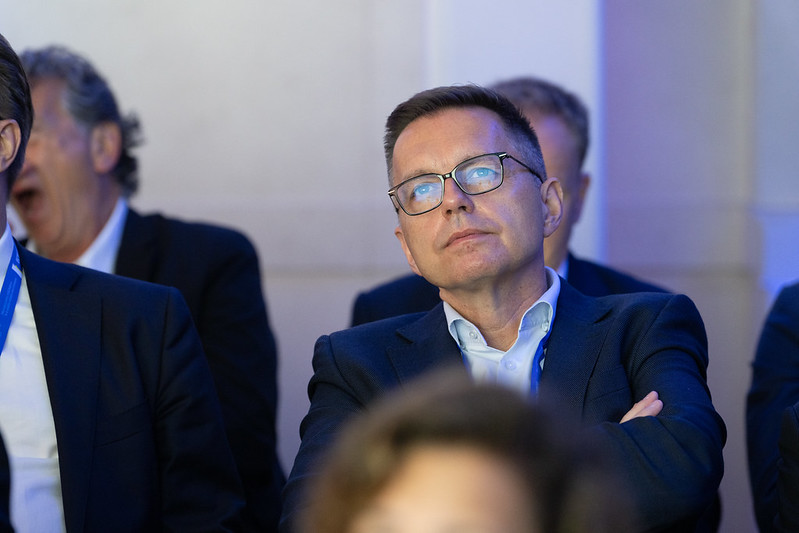
By David Barwick – FRANKFURT (Econostream) – European Central Bank Governing Council member Peter Kažimír said Monday that last week’s rate increase had been necessary and that the ECB still had more to do to contain medium-term inflation pressures.
Kažimír, who heads Národná banka Slovenska, said in a blog post on his institution's website that what began as an external energy shock was now spreading into the broader economy.
Thursday’s decision to raise interest rates was a “measured and necessary step,” he said, with signs emerging that price pressures were moving beyond volatile components and affecting everyday economic activity.
Some could be tempted to look through the shock and wait, especially with longer-term inflation expectations under control, he said.
“This is no time for complacency and hesitation,” Kažimír said.
Higher energy costs were likely to persist longer than many had hoped, he said. Even with the just-announced US-Iran peace framework, the damage in the Middle East could not be repaired immediately, he said.
The longer uncertainty over energy supplies from the Gulf persisted, the greater the risk that broader price developments would be affected, he said.
Indirect effects and second-round dynamics needed to be monitored closely, Kažimír said. Second-round effects were not yet fully visible but “may be approaching,” he said.
“We have taken a first step towards containing medium-term price pressures,” he said. “But the mission is not complete.”
With current information, it was increasingly clear that “monetary policy has more work to do,” he said.
Markets broadly understood how the ECB responded when inflation deviated from target, Kažimír said.
“Even with another rate hike or two, core inflation remains above 2% in our medium-term projection,” he said. “This is not a position I am comfortable with.”
The ECB needed to find an appropriately tight stance that, maintained for some time, would reliably return inflation to target, he said.
While growth remained subdued, the economy was showing resilience, as it had repeatedly in the past, he said.
“While the exact size and timing of our next steps will depend on incoming data, the direction of travel is clear,” Kažimír said.
He said he leaned toward frontloading the remaining work, while retaining flexibility in an uncertain environment.
“Come what may, we won’t sit idle; we will take measured, appropriate steps to deliver on our price stability mandate,” Kažimír said.