
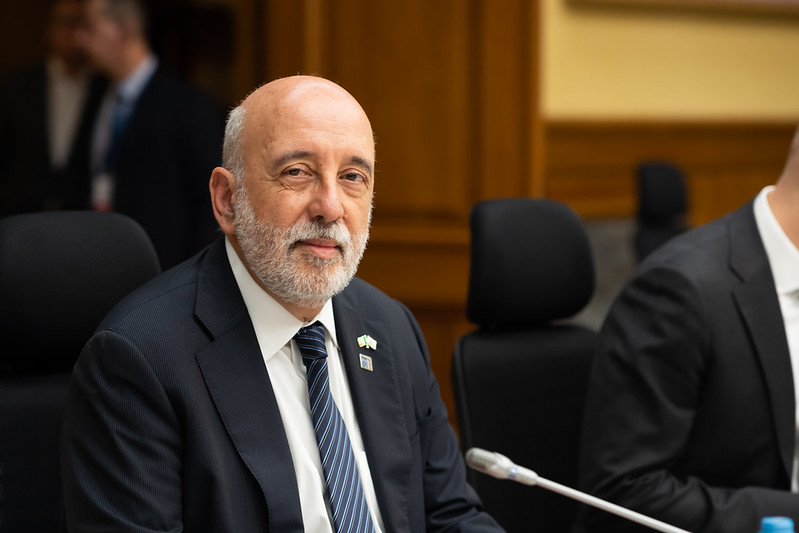
By Marta Vilar – MADRID (Econostream) – European Central Bank Governing Council member Gabriel Makhlouf said on Friday that he had seriously considered raising interest rates at the ECB's October meeting and would support further action in December if the economic evidence warranted it, warning that upside inflation risks remained.
“I supported the decision to leave interest rates unchanged. But I did also seriously consider the case for an increase,” Makhlouf, who heads the Central Bank of Ireland, wrote in a blog post on his institution's website.
“If the evidence in December points to the need for further action, we will take it,” he said.
Makhlouf said he was “uncomfortable” with inflation at its current level and stressed the need for vigilance, while noting that the ECB's December projections would help determine whether higher energy prices or tighter financing conditions would have the greater impact on the inflation outlook.
“Energy is pushing inflation up; tighter financing conditions push the other way,” he said. “The full projection round in December will help to assess the relative impact on the outlook.”
Makhlouf identified three factors behind his decision to support leaving the deposit facility rate unchanged at 2.5%: the 50bp of tightening delivered since June was still working through the economy, long-term bond yields had risen since September, and the effects of higher energy prices and tighter financing conditions were pulling inflation in opposite directions.
“On balance, though, I expect the tightening in financing conditions to dampen demand and inflationary pressures somewhat,” he said.
Makhlouf warned that a prolonged conflict in the Persian Gulf could keep inflation elevated for longer, while raising rates substantially further could carry costs for economic growth.
“Getting that balance right matters more than moving a few weeks earlier,” he said.
The October decision did not imply that the ECB had finished tightening or was preparing to raise rates again imminently, he said, reiterating its data-dependent, meeting-by-meeting approach without pre-committing to a particular rate path.
Although indirect effects from higher energy prices were evident, they were not intensifying, and there was no evidence of second-round effects, with wage growth remaining contained, he said.
However, Makhlouf cautioned that the absence of second-round effects today did not guarantee they would remain absent, particularly as wage-setting adjusted with a lag.
Ahead of December, he said he would monitor the persistence of the energy shock, indirect inflation effects on food, goods and services, wage developments and the extent to which higher bond yields reflected stronger growth prospects rather than risk premia.
- The author of this story can be contacted at marta.vilar@econostream-media.com