
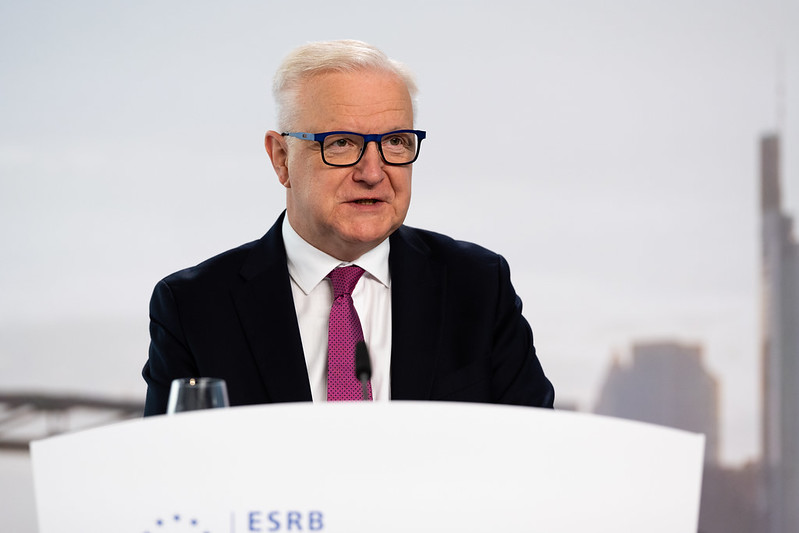
By Marta Vilar – BANGKOK (Econostream) – European Central Bank Governing Council member Olli Rehn said on Saturday that higher energy prices had pushed euro area inflation above target, but that there was so far no evidence of second-round effects on wages or other prices, warning nevertheless that such pressures could emerge gradually.
Speaking at an OMFIF symposium organized with DZ Bank in Bangkok, Rehn, who heads the Bank of Finland, said that “[i]nflation is above target, mainly due to energy, adding that the ECB had not “seen inflation spread to non-energy prices or wages, and there is no sign of second-round effects.”
“But we’ll stay vigilant, as they may creep in quietly, like a cat in socks,” he added, warning that Europe could not afford an affordability crisis.
Rehn said the war in the Middle East had driven up energy prices and inflation, although European economic activity remained relatively resilient.
“European growth may not be brilliant, but it is relatively solid,” he said, pointing to support from defense and infrastructure spending, as well as private consumption that had held up better than expected.
On monetary policy, Rehn said the ECB would continue to act “with a steady hand,” delivering price stability and thereby supporting sustainable growth and job creation.
Turning to financial stability, Rehn warned that the risk environment had become increasingly complex, highlighting geopolitical tensions, artificial intelligence and rising public debt as three major sources of vulnerability.
The wars in Ukraine and the Middle East continued to weigh on the outlook, while climate-related events were imposing growing economic costs, he said.
Although the AI investment boom could deliver significant productivity gains over time, Rehn cautioned that financial exposures were substantial and concentrated, creating the potential for a market correction to spread more widely.
“A sharp correction in AI valuations could spread through the markets,” he said.
Rehn also warned that high and rising public debt in many advanced economies, combined with higher borrowing costs, could increase sovereign risks and expose vulnerabilities elsewhere in the financial system.
Despite these challenges, he said European banks had demonstrated resilience through the pandemic, Russia's invasion of Ukraine and the subsequent energy crisis, supported by strong supervision, capital buffers and timely policy intervention.
Looking ahead, Rehn argued that Europe needed to address what he described as a “triple test” involving defense, energy and productivity.
- The author of this story can be contacted at marta.vilar@econostream-media.com