
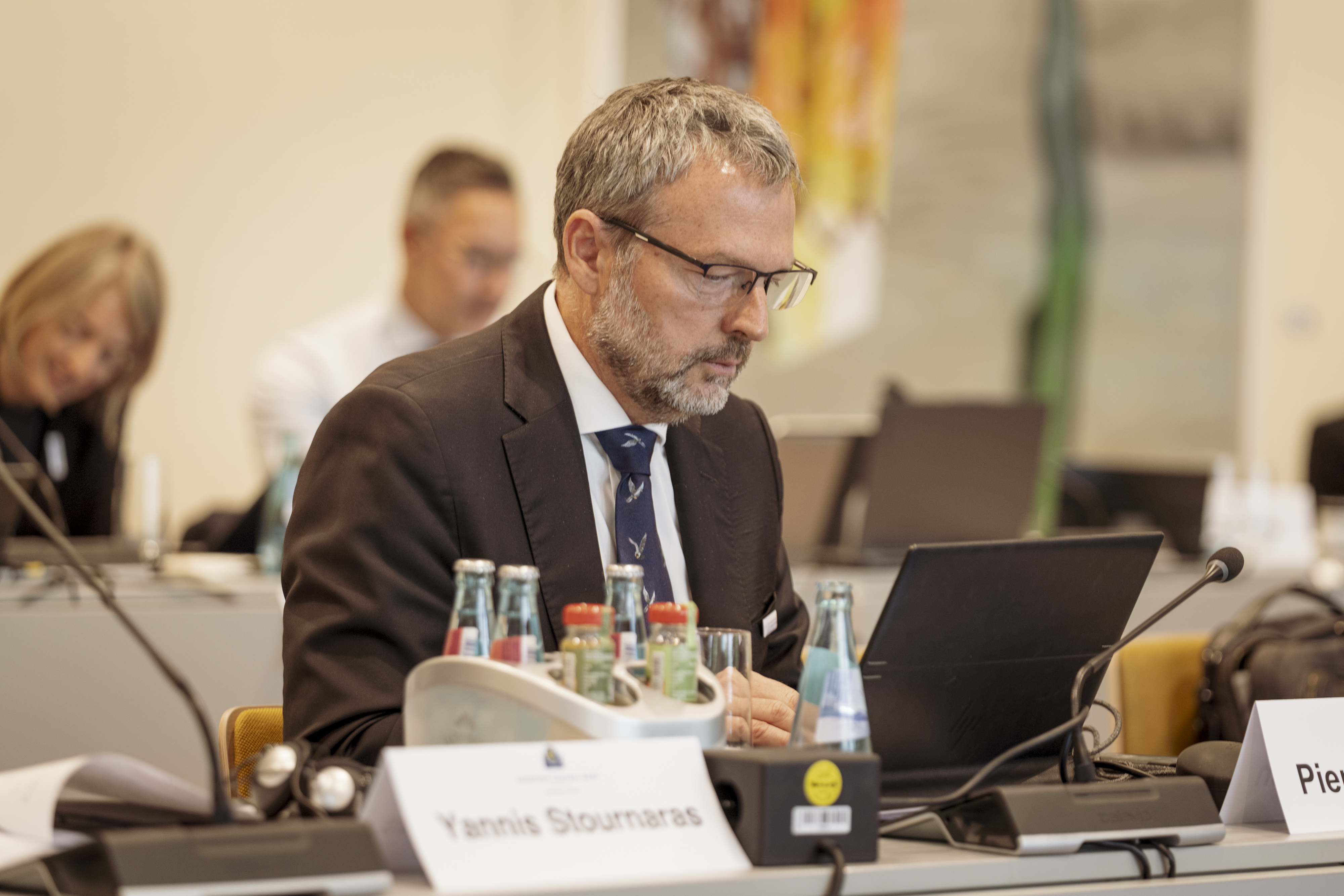
By Marta Vilar – BANGKOK (Econostream) - The recent increase in long-term bond yields does not mean the European Central Bank has finished raising interest rates, according to Pierre Wunsch, member of the ECB Governing Council, who argued that further tightening would be “reasonable” given persistent inflation pressures and the resilience of the Eurozone economy.
In an interview with Econostream on 15 October 2026 (see transcript here), Wunsch, who heads the National Bank of Belgium, said that inflation was running at almost 4%, domestic inflation stood at 3% and energy prices were likely to remain elevated for longer than previously expected.
Against that backdrop, he questioned whether the current deposit rate of 2.5% could be considered restrictive.
"If you have a deposit rate at 2.5%, domestic inflation at 3%, the short-term rate is not restrictive today," he said. "So, it seems reasonable to me that we might have to do more."
However, Wunsch noted that the high degree of uncertainty prevented him from committing to “anything.”
"The market is expecting three rate hikes, which seems reasonable to me," he said. "Moving from three to zero would require some change in our reading of the economic situation, but I would not exclude it."
Wunsch also pushed back against the argument that the recent rise in long-term sovereign bond yields could reduce the need for additional ECB tightening.
"I would certainly not conclude today, from the increase in the long part of the curve, that the job is done," he said.
While acknowledging that higher long-term yields had tightened financial conditions, Wunsch argued that much of the Eurozone economy was financed at shorter maturities, limiting the extent to which the rise in long rates could substitute for monetary policy action.
He also suggested that a further 25bp increase in the deposit rate would not necessarily take monetary policy into restrictive territory.
"If you believe inflation is going to remain at 3% for a while, I don't think 2.75% would be restrictive as such," he said.
He nevertheless stressed the importance of considering the entire yield curve, noting that real rates were positive at longer maturities but remained negative at the short end, even when adjusted for domestic inflation.
On the risk of second-round inflation effects, Wunsch said that “[s]o far, we don't see substantial moves in wage growth, which is comforting,” adding that the ECB could not “wait to have visible and strong second-round effects before we act."
Wunsch described wage developments as "very benign" but warned that headline inflation was currently exceeding wage increases, potentially creating room for workers to seek compensation for lost purchasing power.
Turning to sovereign bond markets, Wunsch declined to speculate on the circumstances under which the ECB might activate its Transmission Protection Instrument (TPI) or Outright Monetary Transactions (OMT).
He nevertheless reiterated that the ECB had instruments available to address market dysfunction, provided the relevant conditions were met.
"If governments do the right thing and, for some reason, markets do not go in the right direction, we are ready to use some instruments," he said.
However, he cautioned that ECB intervention could not substitute for appropriate government policies.
"Monetary policy cannot solve structural problems," Wunsch said.
Asked whether the ECB could halt quantitative tightening amid the recent increase in sovereign yields, Wunsch said that inflation remaining above target made a resumption of asset purchases difficult to justify.
"We have inflation above target, so the bar for restarting some form of QE is relatively high," he said.
He added that quantitative easing should not be regarded as a routine monetary policy instrument, but rather as a tool to address financial instability.
Wunsch also noted that the ECB's monetary policy strategy envisaged the establishment of a structural portfolio, which would be the subject of future discussions.
- The author of this story can be contacted at marta.vilar@econostream-media.com