
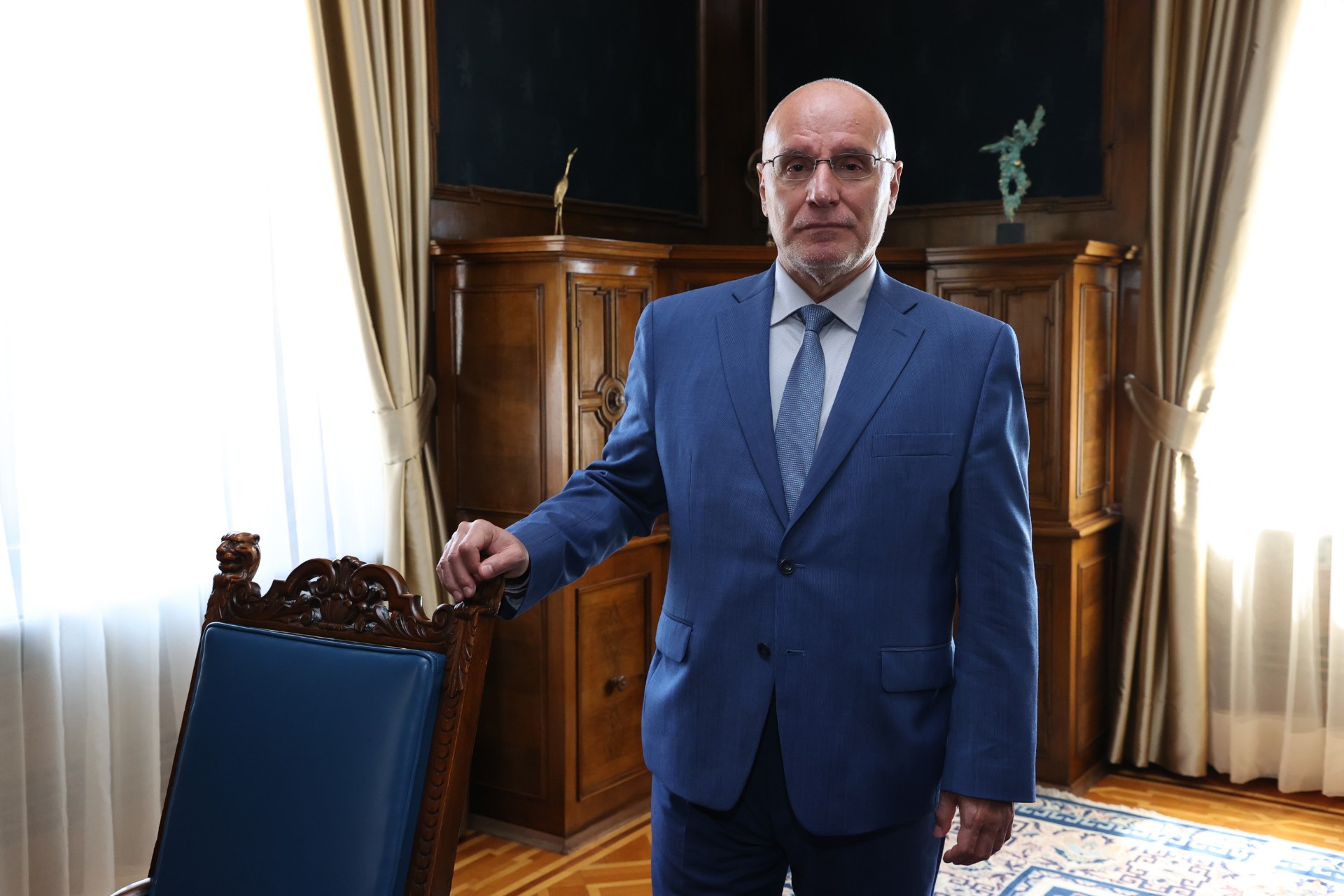
By Marta Vilar – MADRID (Econostream) – European Central Bank Governing Council member Dimitar Radev said Thursday that vigilance should carry slightly greater weight than patience following the September rate hike but stressed that this did not amount to a call for automatic further tightening.
“My assessment after September is that patience remains important, but vigilance should still carry slightly greater weight,” Radev, who heads the Bulgarian National Bank, said in a speech.
“This is not a call for automatic tightening,” he added. “It means that we should give previous decisions time to work while remaining ready to respond if the evidence points to greater persistence.”
Radev said the September rate increase had been a “measured response to a changed inflation outlook,” but noted that it neither meant that the ECB’s work was finished nor put policymakers on a predetermined path.
He said the key question was whether higher energy costs began to feed into broader price and wage setting and inflation expectations.
“At present, we do not see broad-based second-round effects,” he said, pointing to moderating wage growth, comparatively contained services pressures and broadly anchored market-based measures of longer-term inflation expectations.
But Radev warned that the absence of such effects was not enough to rule out further monetary policy action.
“If we wait until such effects are fully established, we may find that we have acted too late,” he said.
At the same time, an excessive response to inflation that would otherwise fade could unnecessarily weaken investment and demand, making the current situation a “risk-management problem,” he said.
Radev also noted that the latest ECB Consumer Expectations Survey showed inflation expectations rising across all horizons, including three-year expectations to 2.9% and five-year expectations to 2.5%.
While the results did not indicate a de-anchoring of expectations, they reinforced the need for careful monitoring, particularly as the survey preceded the latest escalation in energy prices, he said.
Radev said that if energy-price pressures faded, broader inflation remained contained and monetary policy transmission proved stronger than expected, there would be more room to allow previous decisions to work through the economy.
However, “if the shock persists, price pressures broaden, survey expectations continue to move upward, or transmission proves weaker than expected, the case for further action would become stronger.”
Tighter financial conditions that materially weaken credit, investment and demand would also need to be taken into account through their effect on the medium-term inflation outlook, he said.
“Patience does not mean passivity. We should remain ready to act if the evidence requires it,” Radev said.
Growth had meanwhile proved somewhat more resilient than anticipated, but Radev cautioned that “resilience should not be confused with immunity,” pointing to tighter financial conditions, higher borrowing costs and uneven credit developments.
“The balance of risks therefore remains differentiated: risks to inflation are tilted to the upside, while risks to growth are tilted to the downside,” he said.
The ECB will continue to decide meeting by meeting, based on incoming data and without pre-committing to a particular rate path, Radev said.
- The author of this story can be contacted at marta.vilar@econostream-media.com