
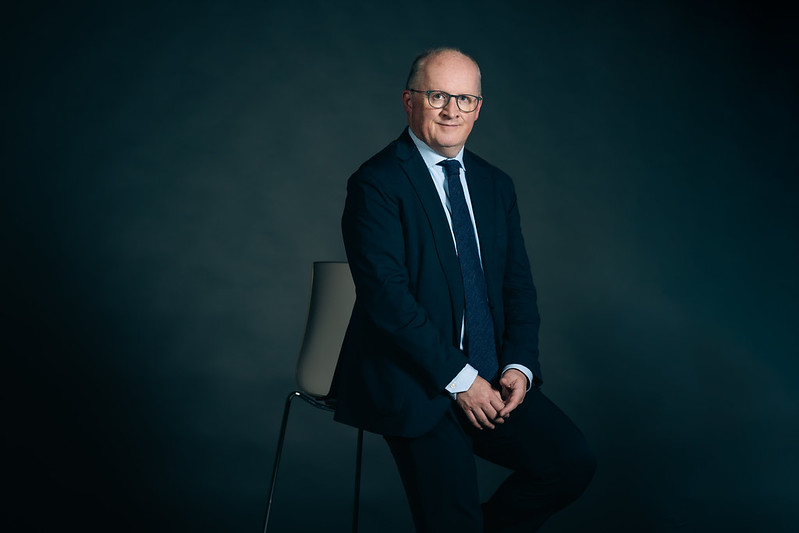
By David Barwick – FRANKFURT (Econostream) – Inflation is likely to remain higher for longer as a second wave of energy price increases works through the economy, though there has so far been no broader spillover into other prices, European Central Bank Executive Board member Philip Lane said in an interview published Tuesday.
“[W]e think that because of this second wave of rising energy prices, inflation is likely to be higher for longer, before falling back towards our target from mid-2027 onwards,” Lane told Swiss newspaper Le Temps in the interview, conducted September 15.
Oil and gas prices have risen again after a temporary recovery over the summer, with geopolitical risks now appearing elevated again, Lane said. The ECB had therefore indicated at its September 10 meeting that the energy shock was likely to last longer than it had expected in March, he said.
Asked whether the shock had affected the prices of other goods, such as electricity, or services prices, Lane replied: “So far, between February and now, no. So that’s the good news.”
However, the renewed energy price increase was expected to exert broader price pressure, he said.
“[W]e think there will be upward pressure on food, energy more broadly – including electricity – and goods in general, while pressure on services remains contained,” Lane said.
The euro area economy should continue expanding at a “steady but modest pace” under the ECB’s baseline, provided the energy shock does not become more severe, Lane said. A larger and more persistent shock this autumn would hold back economic activity, he added.
Government spending, including Germany’s infrastructure and defense package and the Next Generation EU program, was supporting the economy, while European participation in artificial intelligence-related activity could also provide benefits, Lane said.
The ECB’s assumptions about the Middle East conflict were based on financial market pricing rather than a political assessment, Lane said.
“Our baseline reflects the market view as captured in the price of oil and gas,” he said, adding that oil and gas futures pointed to some resolution later this year, although “there's a lot of uncertainty around that baseline.”
Germany had sufficient fiscal space for its additional spending, while Next Generation EU funding did not raise the same debt-sustainability concerns, Lane said. At the same time, he stressed that the boost from government expenditure would fade over time.
- The author of this story can be contacted at david.barwick@econostream-media.com