
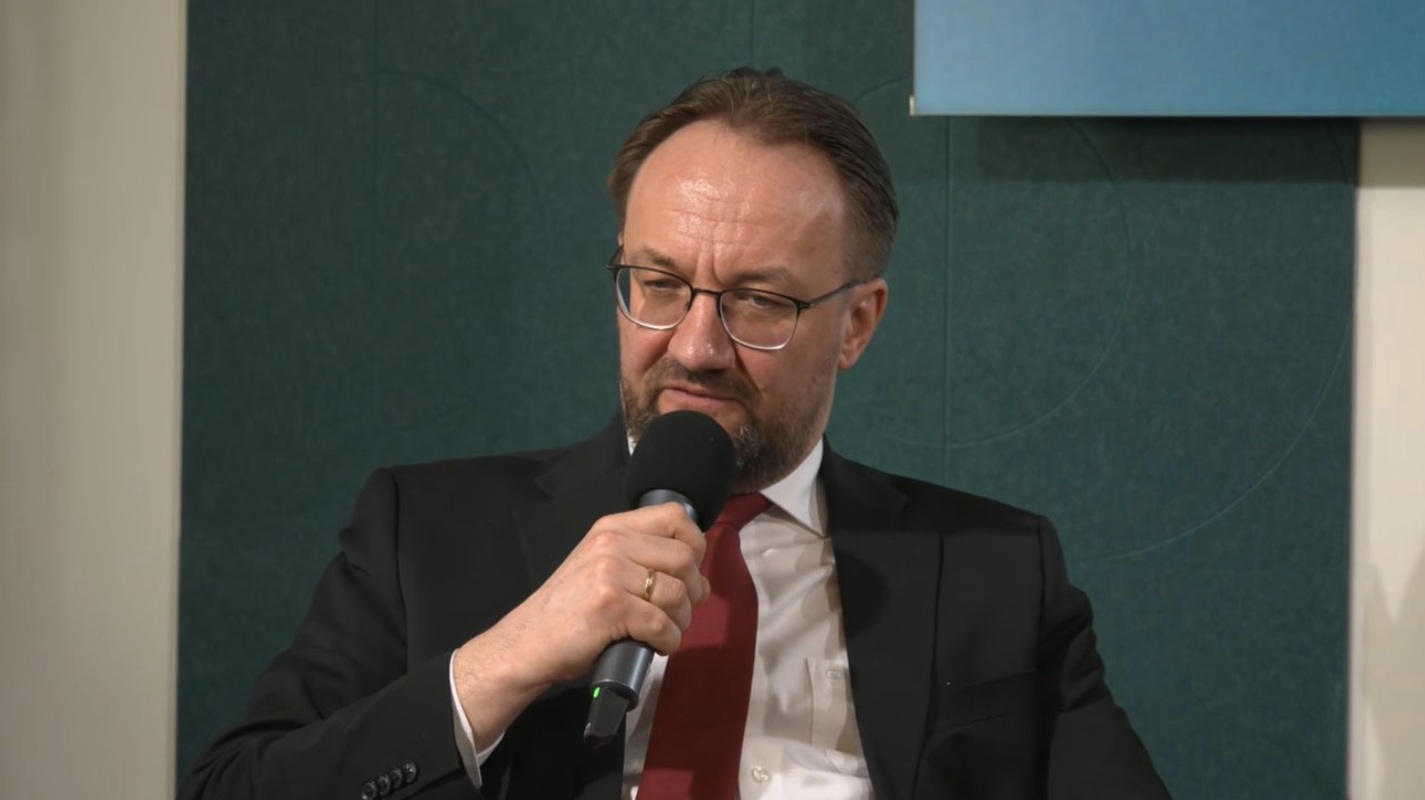
By David Barwick – FRANKFURT (Econostream) – European Central Bank Governing Council member and Lietuvos bankas Governor Gediminas Šimkus said Monday that policymakers would already be able to assess the inflation outlook in October, while the December meeting would bring more data and updated projections.
“High inflation concerns me,” Šimkus told journalists in Vilnius. “The longer high energy prices persist, the stronger the inflationary pressure will be. The longer high energy prices persist, the more important the next decision becomes.”
“If oil and gas prices remain [high] for longer, we will have to assess how much that prolongs the impact on headline inflation,” he said.
“Looking ahead, there will be an ECB Governing Council meeting in December, when there will be more data and we will have updated projections,” Šimkus said. “That will be the time to assess the situation. But there will also be a meeting in October.”
“It is therefore very important how energy prices develop until then and whether this will be a prolonged period of high energy prices,” he said. “It will already be possible to assess the price outlook in October.”
Šimkus did not forecast what the Council would decide in October.
“We will make decisions according to the incoming data, meeting by meeting,” he said.
“Inflation risks are clearly elevated, and the current level of inflation is also a concern,” Šimkus said. “It is expected to rise further over the course of the year. The persistence of inflation is also a concern.”
“The energy-price shock is creating persistent inflationary pressure,” he said. “Energy inflation is the main component and driver of headline inflation. If we look at the balance of risks, it has increased.”
Šimkus said the resilience of economic activity meant that “the possibilities for passing higher prices through into broader increases in goods and services prices are stronger.”
“The focus is on ensuring that a prolonged energy-price shock does not spread into broader movements in goods and services prices, so that price increases for individual goods, such as fuel, do not turn into a generalized, broad increase in almost all goods and services,” he said.
The ECB on Thursday raised all three of its key interest rates by 25bp, taking the deposit rate to 2.50%, and said it would continue to determine the appropriate policy stance on a meeting-by-meeting basis.
In an LRT Radio interview Friday, Šimkus had declined to predict subsequent rate decisions, saying Thursday’s move was “about the present” and “not some kind of decision about the future.”