
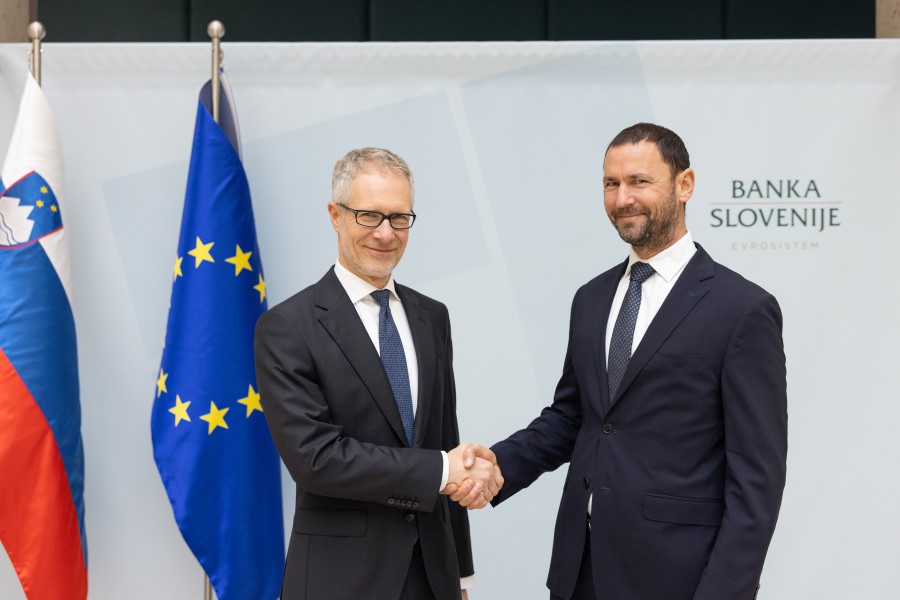
By David Barwick – FRANKFURT (Econostream) – Market participants have increased their expectations of European Central Bank tightening and do not exclude that the deposit rate will reach 3.25% by mid-2027, ECB Governing Council member and Banka Slovenije Governor Primož Dolenc said Friday.
"Market participants have therefore raised their expectations regarding the restrictiveness of ECB monetary policy and do not rule out the possibility of the deposit facility rate rising to 3.25% by mid-2027," Dolenc said in a statement.
Geostrategic conflicts were persisting and their outcomes remained uncertain, Dolenc said. It was becoming increasingly likely that this would contribute to persistently higher oil and natural gas prices, potentially raising energy and electricity costs during the autumn and winter.
At the same time, euro area economic activity remained stronger than expected, while incoming third-quarter data were encouraging, he said.
Against that backdrop, the Council decided Thursday to raise the deposit rate by 25bp to 2.50% after leaving rates unchanged in July.
"We assess that this level of interest rates gives us the flexibility to respond appropriately to all possible outcomes of the war and their potential consequences for inflation," Dolenc said.
The latest projections showed both inflation and economic growth somewhat higher than previously expected over the forecast horizon, reflecting high energy prices and the euro area economy's greater than expected resilience to the energy shock, he said.
Low energy inventories ahead of winter, particularly European gas stocks, were an additional concern, Dolenc said. Together with the resilience of the economy, these risks were pushing market-based inflation expectations for the coming years above 2%, he said.
Despite the difficult environment, conditions in the private sector remained favorable, he said. Investor demand for new corporate bond issues was robust, while equity prices remained high, supported by expectations of earnings growth, he said.
At the same time, expectations that global central bank rates would remain higher for longer and rising public debt in major advanced economies were pushing global government bond yields higher, he said.
Future ECB decisions would remain directed toward stabilizing inflation at 2% over the medium term and would be based on the inflation outlook and associated risks, underlying inflation dynamics and the strength of monetary policy transmission, Dolenc said.
"We will continue to decide on the monetary policy stance on a meeting-by-meeting basis," he said.