
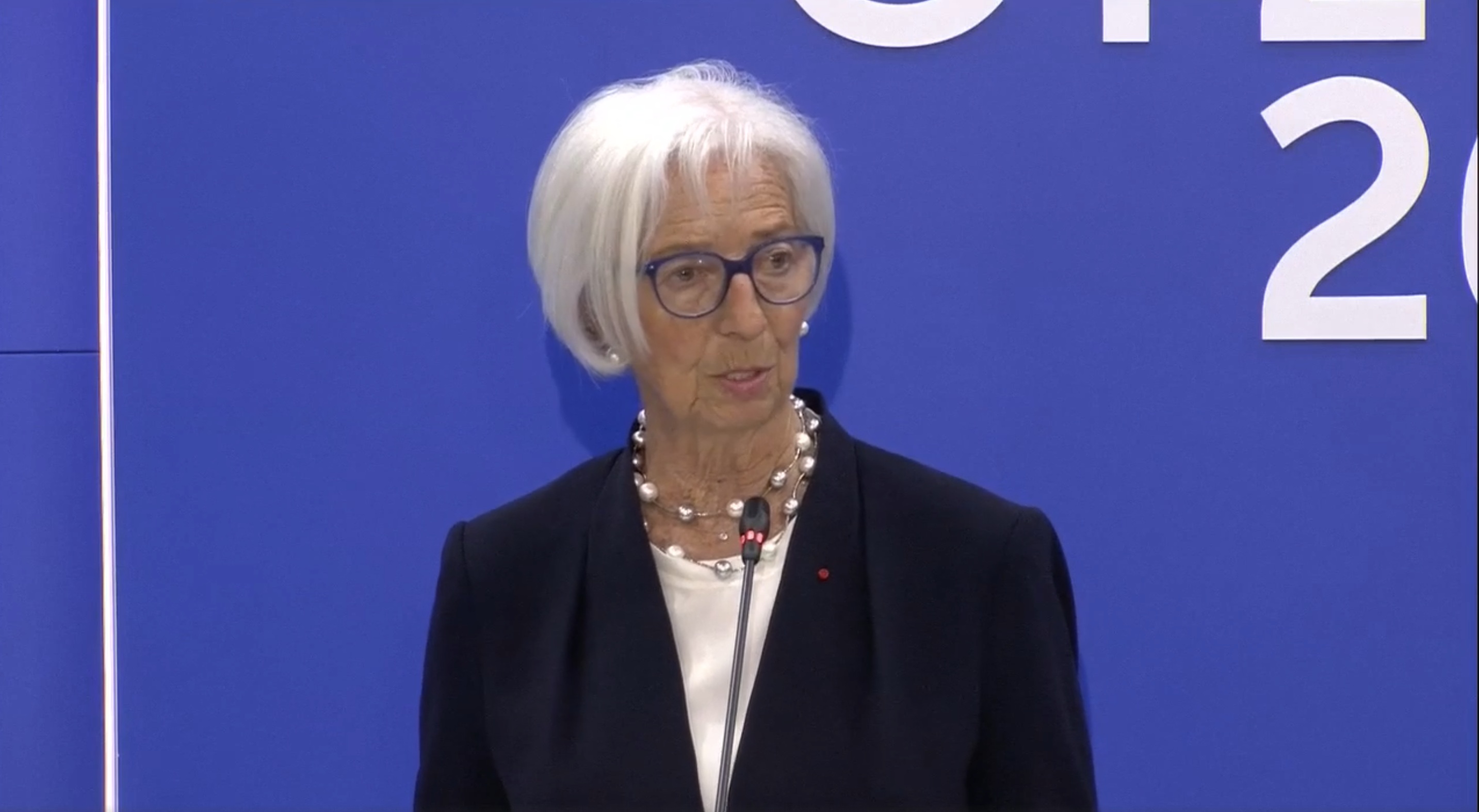
By Marta Vilar – MADRID (Econostream) – European Central Bank President Christine Lagarde said on Friday that she would give little indication of what the ECB will decide at its June 11 meeting, while noting that even if the Middle East war were resolved now, its effects would still be felt with a lag.
In a press conference following the Eurogroup meeting in Cyprus, Lagarde said that the ECB maintained its “firm commitment to price stability amid heightened uncertainty from the energy shock,” which she said was “certainly a very significant shock with direct and indirect effects in our economies.”
The energy price shock was putting upward pressure on inflation while at the same time it was weighing on the economy, she said.
“[L]ong-term expectations remain broadly well-anchored,” she said, reiterating that this applied only to “long-term ones.”
The impact of the energy shock on medium-term inflation and growth would depnd on the magnitude and duration of such shock and the extent of its indirect and second-round effects, she said, adding that the ECB was “particularly attentive” to these.
“And for those of you who would like to receive indications as to what we will do on June 11, I regret to say that you will not have much indication from my end because we will continue to follow a data-dependent and meeting-by-meeting approach in order to determine the most appropriate monetary policy stance in order to deliver on our 2% medium-term target,” she said.
Lagarde said that if governments failed to follow the “triple-T principles” in their fiscal response to the shock, meaning measures should be temporary, targeted and tailored, the resulting impact on the economy would lead to a “different monetary policy stance.”
“[E]ven if the [Middle East] crisis were resolved now, and we hear various rumors here and there, there would be lagging effects that would continue throughout simply because of the necessity to restore the ex ante situation anyway,” she said.
Lagarde added that it was probably a given that price levels would be higher at the end of the crisis, noting that the ECB should address inflation and ensure it remained around 2%, taking the necessary steps to achieve that.
She said the ECB would monitor second-round effects and any de-anchoring of inflation expectations, while also watching other indicators, such as the volume of available oil reserves and how many days those reserves could meet demand without requiring demand compression.